

trackless
 2
7.9
2
7.9

- adjective
- /ˈtræk.ləs/
- The water was placid and trackless.
- trackless wilderness
- trackless expanse
- trackless forest
Examples
-
Meeting during the Venus transit of 1761, Charles Mason and Jeremiah Dixon spent four years in America, running over 300 miles of boundary lines, often through trackless wilderness.
Academic text (2006) -
The snow was trackless and deep, making the journey difficult.
-
The wide game trail they followed was trackless after the rains.
Fiction book (1994) -
A trackless jungle just waiting to be explored.
-
Below, there was the trackless ocean, a Sahara of water.
Fiction book (2002) -
This was to be a long one, into the trackless wilderness, as Cappie put it.
Fiction book (1990) -
The alarm woke me from an unpleasant dream in which I wandered through a trackless forest, trying to find a path out.
Fiction book (1991) -
The terrain out thataway was mostly trackless scrub and rough going besides.
Fiction book (2002) -
Beyond the hills were more hills, and then the flat expanse of the Mojave Desert, trackless and vast.
Fiction book (1994) -
35 hours out of New York, he roars across Siberia's trackless wastes.
Synonyms
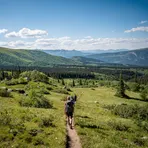 2
5.1
2
5.1
An area with no roads
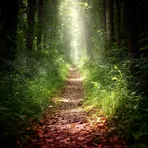 1
6.3
1
6.3
A path or area that no one has visited
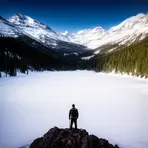

 1
7.7
1
7.7
A place where there are no paths or roads and very few people have been
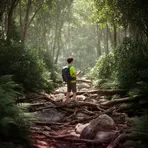 1
7.7
1
7.7
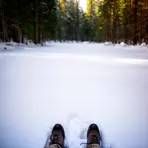
A place with no clear ways to walk
 1
8.8
1
8.8
Land or paths that have not been walked on

To move without leaving marks or signs behind

In a place with no path or track for walking
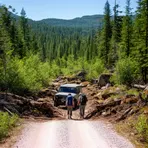
Land with no roads that cars or trucks cannot reach
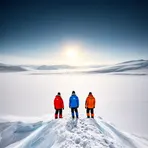
A place people have not gone through or explored
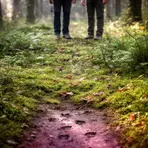
A place that no one has walked on
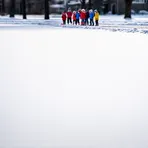
An area with no footprints that people have not walked on

Land where people do not walk, often far from towns

Free from cars and people
Antonyms


Compounds

A bus that uses electricity from wires above the street and does not run on tracks
Surface Forms
Morphology
Etymology
The word trackless is made of track and -less, where track means a path or mark and -less means 'without' (the same 'less' in hopeless). So trackless means 'without tracks or paths', like a field of fresh snow with no marks, which is why we use it for places not marked or traveled.