
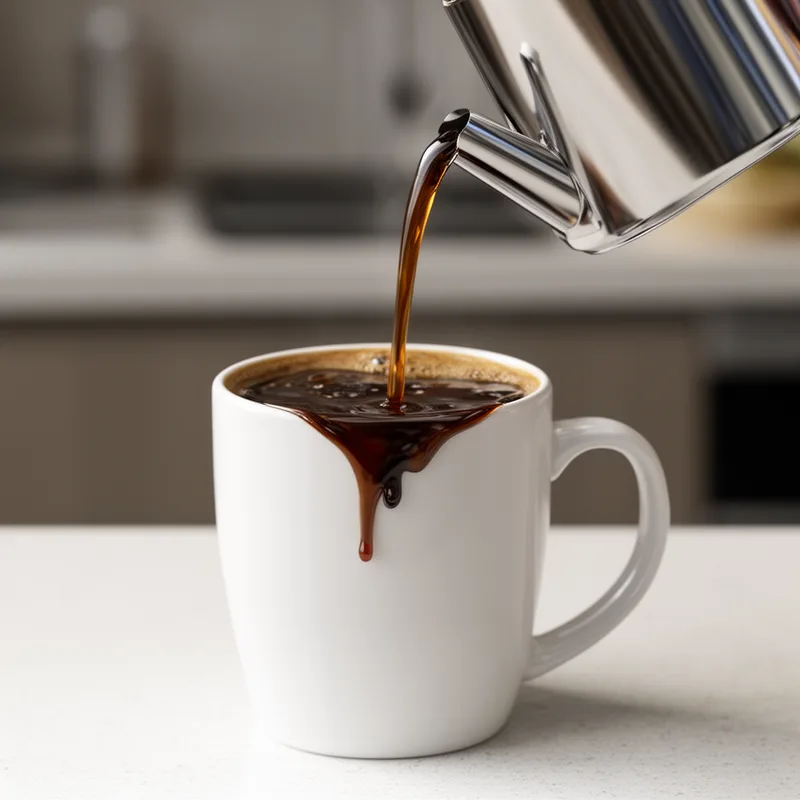
to top off
 5
3.6
5
3.6

- phrasal verb
- /tɑp ɔf/
- Informal
- Maybe once every six or seven months you'll have to top off the nitrogen supply.
- top off the tank
- topped off our glasses
- top off the fuel
Examples
-
"I'll get it." She topped off Dotty's coffee and returned the carafes to their heaters.
Fiction book (1998) -
Reflexively, she topped off my mug of coffee.
Fiction book (1998) -
You go ahead, I'll just top off our drinks.
Fiction book (1995) -
If they have gas, we could top off the tank and refill our cans.
Fiction book (1999) -
AJ topped off their glasses again.
Fiction book (2002) -
I joined him as he topped off our oxygen tanks from the sled's auxiliary tank.
Fiction book (1999) -
With carafes in either hand, she topped off coffees down the row of booths, then worked her way along the counter.
Fiction book (1998) -
The Fearless left Skagway with her quarters stocked with gear and her fuel tanks topped off with diesel oil.
Fiction book (1996) -
We need to top off the tank before we hit the road to avoid running out of gas.
-
At the party, I will top off everyone's glasses before serving dessert.
Synonyms
 ∞
1.0
∞
1.0
To make a place full by putting people or things into it
 23
3.7
23
3.7
To be full to the top, often with a strong feeling
 19
1.8
19
1.8
Make something have no empty space or cause a strong feeling in someone
 5
2.7
5
2.7
To make something so full that nothing else can fit
 3
3.2
3
3.2
To fill something again or add money to an account until full
Antonyms
How Full

Surface Forms
Morphology
The meaning 'to bring to a satisfying conclusion by adding something extra' is directly derivable from combining 'top' (to add a final detail or reach the highest point) with the particle 'off' functioning as a completive/finishing marker in verb+particle constructions. This verb+particle pattern is common and predictable in English, so a B1 learner who knows both constituents and basic phrasal-verb patterns can infer the sense.
Etymology
The verb top off comes from the image of pouring a drink or fuel until it reaches the top of a glass or tank and then giving a small final pour, with the off as that last bit. That's why it means 'to fill something to the top or almost overflowing'.