
tie
 1
7.4
1
7.4

- noun
- /taɪ/
- Specialized
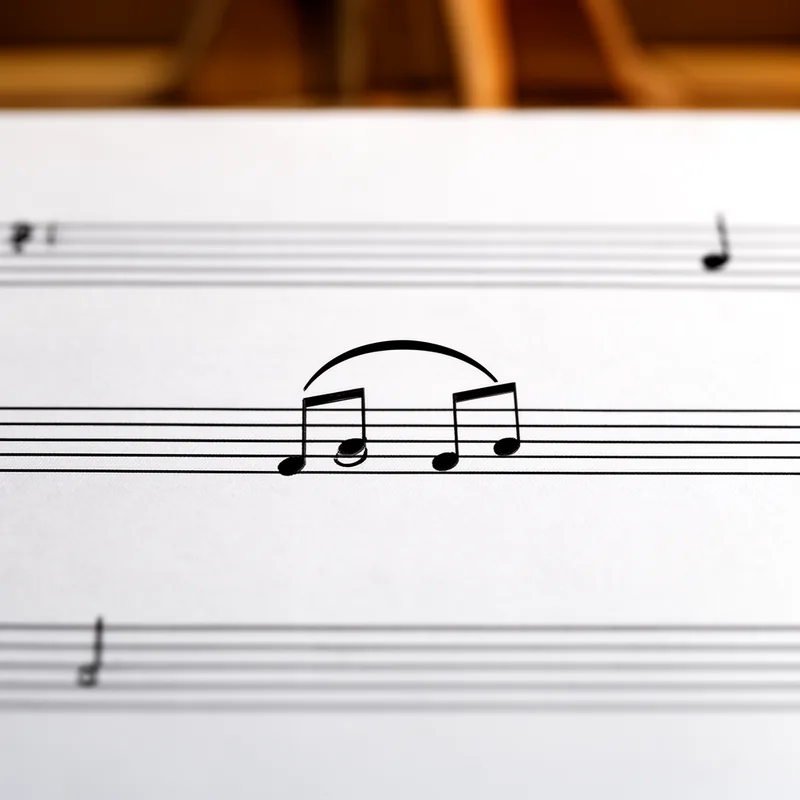
- Music theory explains that a tie is used to indicate how long two identical notes should be held when played together.
Examples
-
The pairs of slurred notes in The Magic Flute depict ties of brotherhood, while the lively music depicts conviviality and joyous repast.
Academic text (1991) -
Students are likely to be reading more advanced rhythm functions, such as elongations, ties, rests, pickups, and syncopations.
Academic text (2015) -
The organ music jarred to life again, and everyone stood to sing, "Blest Be the Tie That Binds."
Fiction book (1996) -
Eliminate ties or rests to clarify rhythmic patterns and then reinsert them.
Academic text (1995) -
Consider the ways music notation uses shortcuts (via ties, key signatures, and repeat signs) and ask students how they do the same in their own communications.
Academic text (2011) -
In sheet music, a tie connects two notes of the same pitch, allowing them to be played as one sustained note.
-
When composing, remember to use a tie between the notes to show their combined duration for clarity.
Idioms



- Informal
1
7.9
To become very confused and anxious because you worry too much
Compounds


- Formal
12
3.7
A formal evening dress code for men that requires a black jacket and bow tie



- Specialized
2
4.1
A heavy wooden or concrete beam laid across railway tracks to hold rails in place


- Formal
2
7.0
A very formal men's evening dress code requiring a white bow tie and tailcoat





- Formal
1
8.1
A very formal evening outfit for men with a white bow tie, white waistcoat, black tailcoat, and matching trousers



 1
8.4
1
8.4
A narrow cloth worn at the neck to show which school someone went to and social connections


- Specialized
1
6.7
A rod that connects the steering parts to the front wheels so they turn together




- Specialized
A small piece of skin under the tongue is too short from birth and stops the tongue moving well

Surface Forms
Etymology
Tie in music is the mark that 'ties' two notes of the same pitch into one longer sound, so you hold the note for their total time.