

to thurify
- verb
- /ˈθʌrəˌfaɪ/
- Specialized
- He watched the bishop thurify the sacred relics, filling the chapel with fragrant smoke.
Examples
-
The priest began to thurify the altar before the start of the Mass.
-
During the ceremony, acolytes thurified the congregation as a sign of blessing.
-
The priest will thurify the altar during the ceremony.
-
She thurified the church with incense last Sunday.
-
During the ceremony, acolytes thurified the congregation with incense to symbolize blessing.
-
He watched the bishop thurify the sacred relics, creating a cloud of fragrant smoke in the chapel.
-
The priest began to thurify the altar, filling the air with the sweet scent of burning incense.
Synonyms

 1
7.4
1
7.4

To burn a scented material to make a place smell nice, often in a ceremony
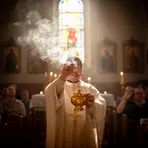
To burn incense so a place smells sweet
Surface Forms
Morphology
thurify = thur + ify
Formed from the combining element 'thur-' plus the productive verb-forming suffix '-ify', but 'thur-' is not a standalone English word and the formation is rare/archaic, so learners cannot reliably infer the meaning from parts.
Etymology
Thurify comes from an old word thuris meaning 'incense', a fragrant smoke used in worship. So to thurify is to perfume a place by burning incense, often as part of a religious ceremony.