
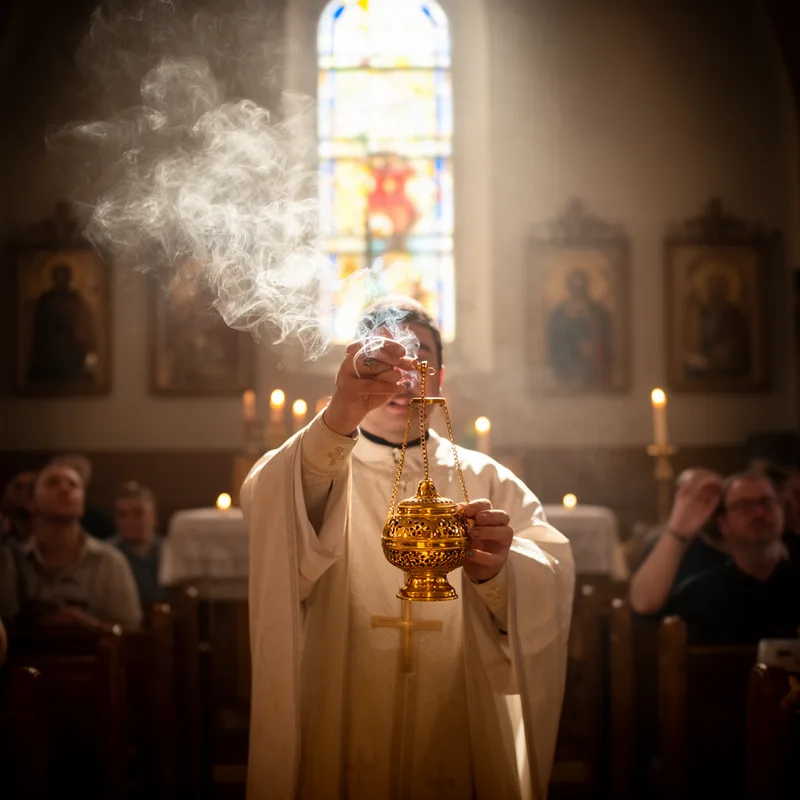
to cense
- verb
- /sɛns/
- Specialized
- The priest began to cense the altar with sweet-smelling incense during the evening service.
Examples
-
Monks silently censed the chapel before the congregation entered.
-
As the ceremony started, the deacon censed the sacred icons, filling the church with fragrance.
-
The priest will cense the altar during the ceremony.
-
During the service, the minister censed the congregation.
-
During the ceremony, the priest began to cense the altar with fragrant incense to purify the space.
-
The monks would cense the chapel every morning, filling it with the rich aroma of sandalwood.
-
As part of the ritual, the elder began to cense the congregation, enveloping them in a cloud of incense.
Synonyms

 1
7.4
1
7.4

To burn a scented material to make a place smell nice, often in a ceremony

To fill a place with incense smoke during a religious ceremony
Surface Forms
Etymology
Cense is linked to incense and censer and comes from the Latin root incendere, which means 'to burn'. So to cense is to 'burn' incense or wave its smoke with a censer to perfume a place, especially in a religious service.