

thunderbolt
 6
3.5
6
3.5

- noun
- /ˈθʌndərˌboʊlt/
- Zeus saw that Fayeton was destined for a crash that would set the earth ablaze, so he hurled one of his mighty thunderbolts at the boy.
Loading YouTube…
Watch on YouTubeSo and then of course, Zeus holding the Thunderbolt that says, note the spiral form of the Vajra right here.
- So and then of course, Zeus holding the Thunderbolt that says, note the spiral form of the Vajra right here.
- Which could mean like here, it's translated as lightning, but it's often translated as the Thunderbolt, which is also similar.
Examples
-
The thunderbolt was a symbol of Jupiter's disguises and was particularly connected to the eagle.
Academic text (1994) -
Because of its sturdy construction, the Thunderbolt became legendary.
Academic text (2002) -
The noise it made in coming was like that of a Thunderbolt falling from the skies.
-
Only one word emerged clearly, and that one hit the room with the force of a thunderbolt: "... danger ..."
Fiction book (1998) -
I see the deadly thunderbolt poised above his head.
-
The sudden flash of light and loud crash was like a thunderbolt splitting the sky.
-
During the storm, a thunderbolt illuminated the landscape before the deafening roar followed.
-
As they watched the storm gather, a brilliant thunderbolt struck nearby, shaking the ground.
Synonyms
 512
1.0
512
1.0
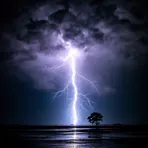
A sudden bright flash in the sky during a storm caused by electricity
 40
1.7
40
1.7
A sudden bright flash of lightning in the sky
 14
3.2
14
3.2
A sudden flash of electricity from the sky that hits something or a sudden strong idea
 9
2.1
9
2.1
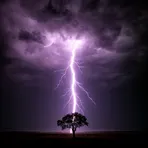
A sudden bright flash in the sky during a storm that often comes before thunder
Antonyms

Surface Forms
Morphology
Etymology
Thunderbolt comes from the two parts thunder and bolt, where bolt used to mean a 'shaft' or 'arrow' shot from the sky; imagine a bright arrow of lightning followed by a loud crash, which is why a thunderbolt is a flash of lightning followed by thunder.