

thromboplastin
- noun
- /ˌθrɒmboʊˈplæstɪn/
- Specialized
- In the laboratory, they used thromboplastin to measure the prothrombin time in patients suspected of bleeding disorders.
- partial thromboplastin
- activated thromboplastin
- thromboplastin time
Examples
-
Laboratory studies revealed increased prothrombin and activated partial thromboplastin times, as well as a significant metabolic acidosis on the arterial blood gas.
Academic text (2007) -
In their thrombotic patients, the addition of APC to plasma did not result in the expected prolongation of the activated partial thromboplastin time (APTT).
Academic text (1993) -
The doctor ordered tests that required thromboplastin to evaluate the patient's coagulation status.
-
During the coagulation study, the presence of thromboplastin was crucial for initiating the extrinsic pathway.
Compounds
- Specialized
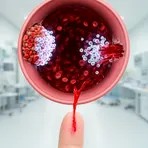
A protein in blood that helps it to clot and whose lack causes heavy bleeding
Surface Forms
Morphology
thromboplastin = thrombus (opaque) = thrombo + plasto + in
The laboratory reagent sense uses the same technical morphemes; the combining forms and '-in' are specialist elements not transparent to average learners.
Etymology
The word thromboplastin comes from the Greek parts thrombo- 'clot' and -plastin 'to form', and you can remember -plastin by thinking of plastic as 'shaping'. In the lab, a thromboplastin reagent is called that because it makes blood start to 'form' a 'clot', which is exactly what the test needs to measure.

