
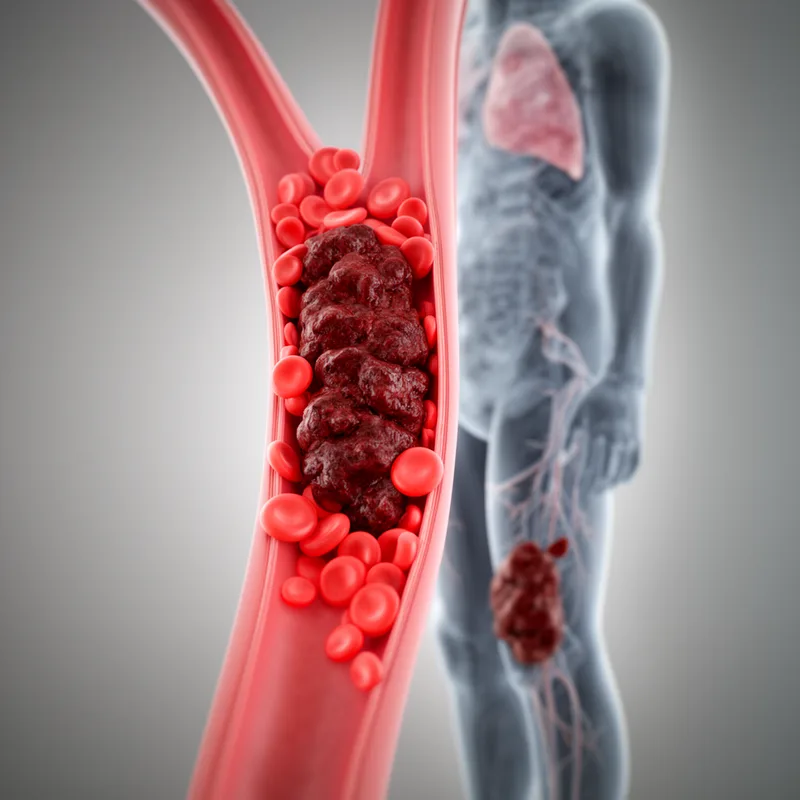
thromboembolism
- noun
- /θrɒmboʊˈɛmbəlɪzəm/
- Specialized
- Early mobilization after surgery helps reduce the incidence of thromboembolism in postoperative patients.
- venous thromboembolism
- pulmonary thromboembolism
- risk of thromboembolism
Examples
-
Eighty-two percent of facilities used measures for venous thromboembolism prevention.
Academic text (2014) -
The association between current use of oral contraceptives and increased risk of venous thromboembolism (VTE) has been firmly established.
Academic text (1999) -
Clinical presentation and risk factors for venous thromboembolism are shown in Table 1.
Academic text (2002) -
Venous thromboembolism is a common complication in the perioperative period in injured patients.
Academic text (2016) -
Of these patients, nine experienced venous thromboembolism during follow-up (1.8% 0.8-3.3).
Academic text (2002) -
Study 2 compared the risks of nonfatal venous thromboembolism (VTE) among users of the same three combined OCs.
Academic text (1995) -
Subsequently, a series of case-control studies have evaluated the risk of venous thromboembolism (VTE) associated with OCs.
Academic text (1995) -
Tools for predicting risk for arterial or venous thromboembolism include the CHADS2, CHA2DS2-VASc, QStroke, and QThrombosis scores.
Academic text (2014) -
Venous thromboembolism can lead to serious complications if not diagnosed early.
-
Patients undergoing surgery are often assessed for the risk of thromboembolism to prevent adverse events.
Synonyms

 17
8.1
17
8.1

A sudden blockage in a blood vessel by a clot or air bubble carried in the blood
Surface Forms
Morphology
Etymology
The word thromboembolism comes from two parts: thrombo- from thrombus meaning 'clot', and embol- from embolus meaning 'a plug that moves and blocks', like a plug in a pipe. So a thromboembolism is when a blood clot or a piece of one travels and blocks a blood vessel, which explains the medical meaning.