
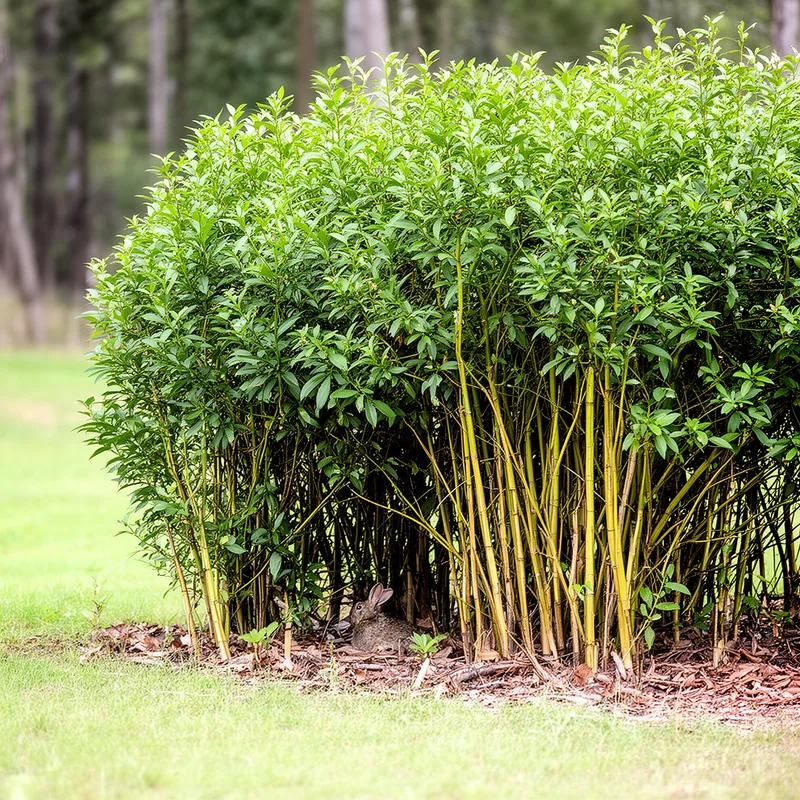
thicket-forming
- adjective
- Many thicket-forming shrubs provide shelter for wildlife in forest edges and clearings.
Examples
-
Certain thicket-forming plants are intentionally used to create natural barriers along property lines.
-
The bamboo is a thicket-forming species that can quickly dominate disturbed areas.
-
The thicket-forming shrubs provide excellent cover for wildlife.
-
Many thicket-forming plants thrive in this region.
-
Many species of bamboo are thicket-forming, creating lush green groves that provide shelter for wildlife.
-
In the forest, the thicket-forming shrubs provide a dense habitat for various birds and small animals.
-
The garden features thicket-forming plants that grow closely together, forming a vibrant green barrier.
Synonyms

 42
2.8
42
2.8

Thick with plants making it hard to walk through

Covered with thick bushes or small trees

Plants or trees that grow very close together and form a crowded group
Antonyms

How Dense

Surface Forms
Morphology
Etymology
The word thicket-forming comes from thicket, which is related to the English word thick meaning 'dense', and forming, which means 'making'. So a thicket-forming plant is one that 'grows together' and 'makes' a dense group of bushes.