

thermosetting resin
- noun
- /ˌθɜrməˌsɛtɪŋ ˈrɛzɪn/
- Specialized
- The engineer chose a thermosetting resin for the project because it hardens permanently when heated, providing exceptional durability.
Examples
-
Bismaleimide resin is the typical representative of present heat-resistant thermosetting resins, which have been used in many cutting-edge fields such as aerospace, electronic information, and insulation.
Academic text (2018) -
The stiffness of a thermosetting resin is usually characterized by storage modulus, which shows the ability to store elastic energy.
Academic text (2018) -
Toughness of thermosetting resins is generally characterized by impact strength and fracture toughness (K_IC) 52.
Academic text (2018) -
Many electronic devices use thermosetting resins for their casings, as these materials do not soften under high temperatures.
-
In manufacturing, thermosetting resins are preferred for their ability to maintain strength and shape after being heated.
Synonyms
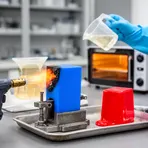
Materials that harden when heated and cannot be made into a new shape
Antonyms
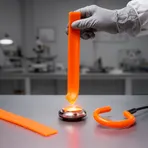
- Specialized
A man-made material that becomes soft when heated and hard when cooled so it can be reshaped many times
Surface Forms
Morphology
The compound is fully compositional: 'thermosetting' (hardens permanently upon heating) modifies 'resin' (a synthetic sticky material), so the phrase straightforwardly denotes a resin that irreversibly hardens when heated. Although technical, the meaning follows directly from the constituents and would be predictable to a learner who knows both words.
Etymology
Thermosetting resin gets its name from thermo (heat) and setting (becoming fixed), so it literally means a sticky resin that 'sets' when heated. Think of baking a cake: once it is cooked it becomes solid and you cannot turn it back into batter, so a thermosetting resin hardens when heated and 'cannot be reshaped'.

