

thermoplastic resin
- noun
- /ˌθɜrməˈplæstɪk ˈrɛzɪn/
- Specialized
- Advances in thermoplastic resin technology have led to lighter, more flexible car parts.
Examples
-
Many manufacturers prefer thermoplastic resin because it can be easily reshaped with heat.
-
The toy was made from a durable thermoplastic resin that withstands rough handling.
-
The new product is made from thermoplastic resin.
-
Many toys are created using thermoplastic resins.
-
The model was crafted from thermoplastic resin, allowing it to be reshaped easily with heat.
-
Innovations in thermoplastic resin technologies have improved the durability and versatility of products.
-
Manufacturers prefer thermoplastic resin for its ability to be molded into complex shapes multiple times.
Synonyms

 26
4.4
26
4.4

A thick sticky substance from plants or made by people for glue and plastic


 1
6.1
1
6.1
A plastic material that becomes soft when heated and hard when cooled
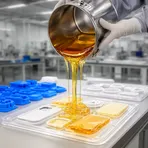
A man-made sticky material used to make plastics
Antonyms

- Specialized
A type of plastic that hardens when heated and cannot be melted again
Surface Forms
Morphology
This is a straightforward adjective + noun combination: 'thermoplastic' specifies a material that softens when heated and 'resin' is a plastic-like substance, so a learner who knows both can infer it is a resin that can be remolded with heat. Although technical vocabulary, the meaning is fully compositional and follows standard modifier+noun semantics, making it predictable to someone familiar with the constituents.
Etymology
Thermoplastic resin comes from its parts: thermo means heat, plastic means easy to shape, and resin is a sticky material. So the image is a material that 'softens' when heated and 'hardens' when cooled, which is why the name means a material you can heat, reshape, and use again.