
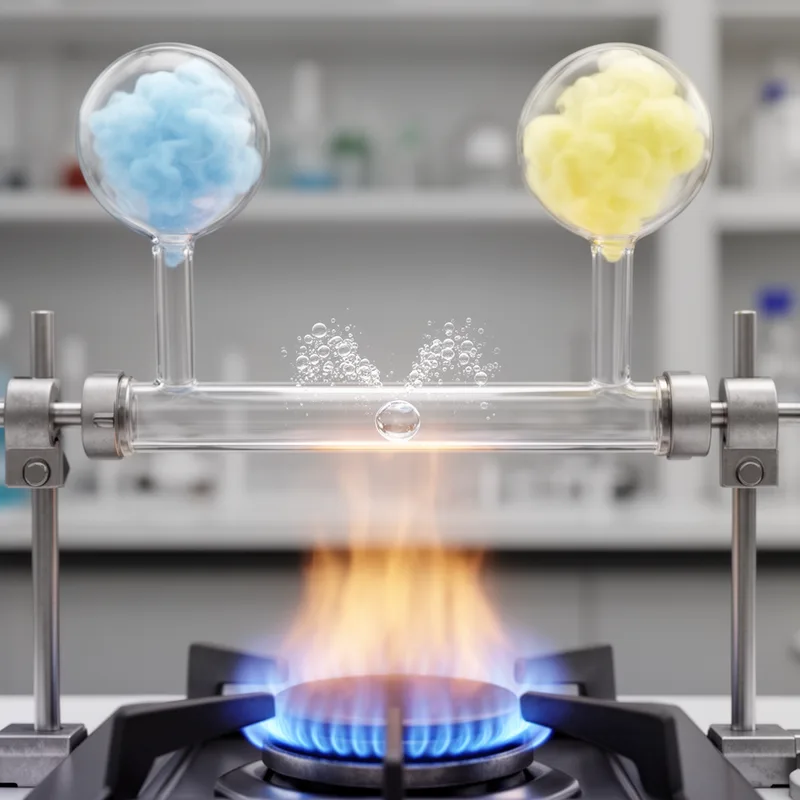
thermolysis
- noun
- /θɜrˈmɑləsɪs/
- Specialized
- The thermolysis of water produces hydrogen and oxygen gases at high temperatures.
Examples
-
Researchers studied the thermolysis of organic compounds in the laboratory.
-
Industrial processes often use thermolysis to break down complex materials.
-
The process of thermolysis can break down complex compounds.
-
In chemistry, thermolysis is crucial for understanding reactions.
-
The thermolysis of plastic waste can convert it into useful fuels during high-temperature processing.
-
Scientists observed the thermolysis of various compounds to analyze the gas emissions produced under heat.
-
Through thermolysis, researchers can effectively decompose hazardous materials into safer compounds.
Synonyms

 1
9.9
1
9.9

The breaking of materials like wood or plastic by very high heat into simpler parts
Heating a substance to a very high temperature so it breaks down or metals react with oxygen
Antonyms

Surface Forms
Morphology
Etymology
Thermolysis comes from thermo- 'heat' (like in thermal) and -lysis 'breaking apart'. So thermolysis means 'breaking apart by heat', which explains when a substance is broken down by heating.