

tansy ragwort
- noun
- /ˈtæn.zi ˈræɡ.wɔrt/
- UK
- Volunteers gathered in the field to remove patches of tansy ragwort before it could flower.
Examples
-
Cattle can become seriously ill if they consume large amounts of tansy ragwort.
-
The farmer was concerned to see tansy ragwort spreading across his pasture.
-
The tansy ragwort is often found in fields.
-
Farmers are concerned about tansy ragworts invading their pastures.
-
Cattle can become seriously ill if they consume large amounts of tansy ragwort.
-
The farmer was concerned to see tansy ragwort spreading across his pasture.
-
Volunteers gathered in the field to remove patches of tansy ragwort before it could flower.
Synonyms
 1
8.6
1
8.6

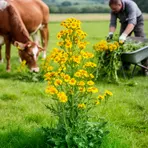
A wild plant with yellow daisy-like flowers that is poisonous to farm animals
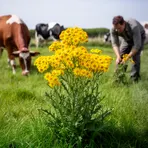
A common European plant with bright yellow daisy-like flowers called ragwort that is poisonous to cattle

A common weed with yellow daisy-like flowers that can poison cattle
Surface Forms
Morphology
This is a compositional noun phrase where 'tansy' modifies 'ragwort', so a learner who knows 'tansy' (a yellow‑flowered herb) and 'ragwort' (a harmful weed) can infer it denotes a ragwort species resembling or related to tansy — a yellow, often toxic weed. The modifier+noun pattern is a regular, cross‑linguistic compounding strategy, making the sense reasonably predictable to a B1 learner.
Etymology
Tansy ragwort comes from two plant names: tansy (a bitter-smelling herb) and ragwort (a common yellow wildflower). People thought this plant looked like a ragwort but had leaves and a smell like tansy, so the name helps you remember it is a wild 'weed' that can be 'toxic' to cattle.