
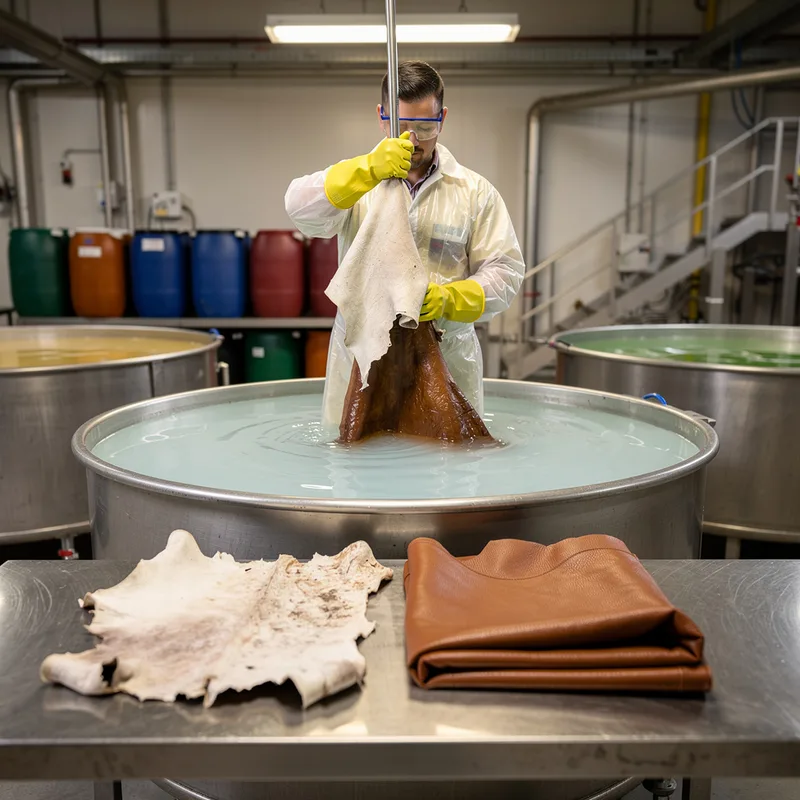
tanning
 2
4.1
2
4.1

- noun
- /ˈtænɪŋ/
- Specialized
- The oil was used in the manufacture of cosmetics, linoleum, paint, and soap, and in leather tanning and steel tempering.
- tanning leather
Examples
-
Likewise, the oak bark used in the tanning process could not come from any old oak.
Fiction book (2000) -
Rinse the pelt well before tanning.
Fiction book (1994) -
We're doing leather tanning in art club.
-
The deer brains would be saved for the tanning of the hide.
Fiction book (1995) -
Among the major industrial sources of water pollution are electroplating, bleaching, dyeing, and leather tanning.
Academic text (1990) -
The latter followed occupations that included pottery making, leather tanning, carpentry, and blacksmithing.
Academic text (1998) -
During peacetime, the mangrove forests of Vietnam are an important source of seafood, as well as of tannin for tanning leather and charcoal for cooking fuel.
Academic text (1990) -
The tanning of animal hides is essential for producing high-quality leather products.
-
During the tanning process, the hides are treated with natural tannins to enhance their durability.
-
Traditional methods of tanning often use plant extracts, such as oak bark, to preserve the hides.
Synonyms
The process of treating animal skins to make leather
Compounds

A group of businesses that offer ways to darken the skin, like spray tans and sunbeds
How Processed


Surface Forms
Morphology
Etymology
Tanning (leather) is the old craft name: a tanner used tree bark and other materials to turn animal skin into strong, brown 'leather'. That's why tanning means the process of changing raw skin into usable 'leather'.