
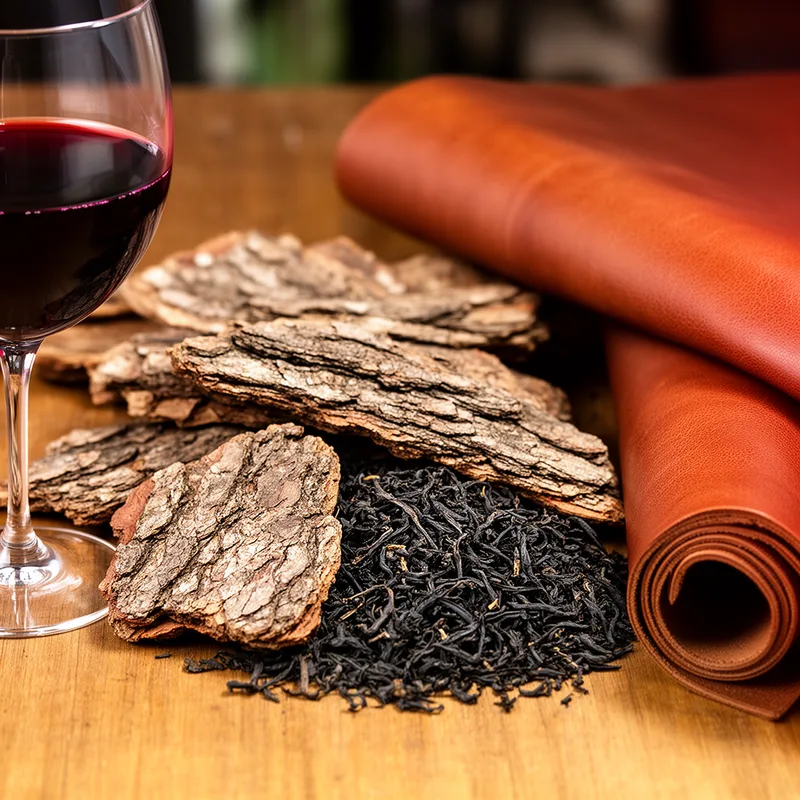
tannin
 9
6.9
9
6.9

- noun
- /ˈtænɪn/
- Specialized
- Flavors of red plums and blueberries give a rich expression of round tannins and a long, smooth finish.
- tannin levels
- acid and tannin
- phytic acid and tannin
Loading YouTube…
Watch on YouTubeSo the less ripe the fruit is, the higher it's tannin concentration.
- So the less ripe the fruit is, the higher it's tannin concentration.
- I think, as I said earlier, soft tannins, fruit upfront, and for me, that's the key.
- Add milk to it and you want to explain the tannins binding with the milk?
- Wine did taste really because of the the tannins.
- We took at least three samples from all these regions and the result was quite expected because this is a tannin based dye.
- I think that is settled tannins that have gone to the bottom.
- Very clean, nice tannins on the, you know, really sweet tannins, which I'm sure makes you know how many people, how many people drink wine.
Examples
-
The best bottles have fine tannins that enhance the wine's flavor and support aging.
-
We don't get the tannin they do in Bordeaux.
Fiction book (1997) -
So the less ripe the fruit is, the higher it's tannin concentration.
-
You know, tea actually contains a higher tannin content than coffee, so it's more likely to stain your teeth.
-
So, what is it about the tannin in tea that makes tea a good hardwood floor cleaner?
Blog text (4) -
The 85% bar has a healthy hit of tannins, with strong oak/mahogany notes.
Blog text (21) -
You don't want a red with lots of tannins with fish because it will make the fish taste metallic.
Blog text (6) -
In black tea, active ingredients included tannins and theaflavins, in addition to EGCG.
Academic text (2003) -
There were ripe tannins from the start with some plum and strawberry flavors.
Blog text (25) -
There was texture from tannins, flavors of dried herbs, a waxy note, and tart berries.
Blog text (32)
Synonyms
 1
6.7
1
6.7
A natural plant substance people use to treat leather and make skin firmer
How Tannic

Surface Forms
Morphology
Etymology
Tannin comes from old words connected to tan, which means 'to make leather' by using oak bark and other plants. So tannin is the plant 'juice' used to 'tan' hides and it is also what gives wine and tea their dry, mouth‑puckering taste.