
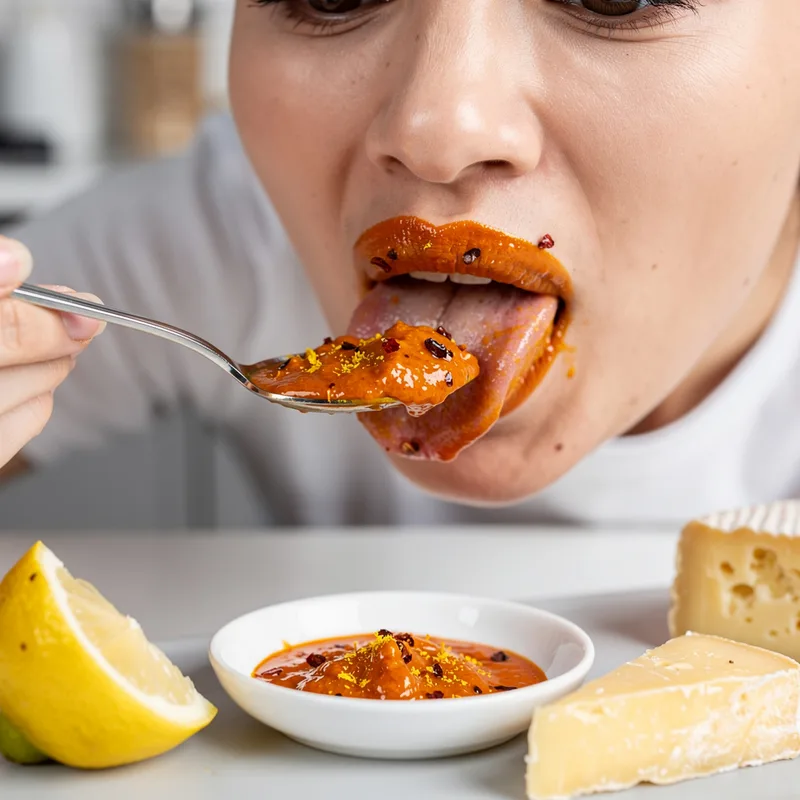
tang
 6
5.9
6
5.9

- noun
- /tæŋ/
- But before the dawn of day, feral hogs descended from the woods, drawn by the tang in the air.
- faint tang
- smell the tang
- salty tang
Loading YouTube…
Watch on YouTubeIt really does add some Tang into the cream cheese so it doesn't taste as heavy.
- It really does add some Tang into the cream cheese so it doesn't taste as heavy.
- Oh wow, cheddar sour cream just has a a splendid Tang to it.
- So having it with the lemonade just gives it a bit more of a Tang and a Zing versus being just like a purely sweet flavor.
Examples
-
Now the Pacific Ocean roared in Casi's ears, and the salty tang of it caressed her nose.
Fiction book (2002) -
Sarah breathed the wet-nickel tang of the wind he'd let in.
Fiction book (2000) -
Put some in my coffee to get a little tang.
-
Sweet, crisp, slight tang on the finish.
-
Bright smelled the tang of pine in the still air.
Fiction book (2001) -
A wind gusts from the south, bringing the sharp tang of Lake Ontario with it.
Fiction book (2001) -
I found my way to the docks, breathing in the salt and metal tangs of the ocean.
Fiction book (1999) -
Casi savored the salty tang as she had when she was ten.
Fiction book (2002) -
The wind was practically gale force, flattening back my hair and blowing a tang of salt onto my lips.
Fiction book (1995) -
The dish had a delightful tang that made it incredibly refreshing.
Synonyms
 346
1.0
346
1.0
The taste and smell that food or drink has
 3
7.5
3
7.5
A small strong taste often from a spice
 3
4.0
3
4.0
A strong pleasant taste you notice in food
 2
3.7
2
3.7
A sharp, sour taste often in fruits
 1
4.2
1
4.2
A sharp, pleasantly sour taste like lemon, often with a little spice
 1
2.9
1
2.9
A strong, biting taste or smell that stings the nose


 1
9.9
1
9.9
A strong, pleasant taste in a food or drink

A strong, sharp taste or smell that can be unpleasant for some people

A pleasantly sharp taste that makes food more exciting

A pleasant spicy taste that makes your mouth feel lively

A sharp, spicy taste or lively quality that makes things more exciting

A sharp, lively taste like lemon or mild spice

A sharp, slightly sour taste that feels fresh in the mouth
Antonyms


Compounds


A Chinese dynasty ruling from 618 to 907 that is famous for art, learning and trade
How Tangy

Surface Forms
Etymology
Tang for a strong taste is easy to remember: think of the sharp smell and flavour of seaweed called 'tang', which gives the idea of a strong, lasting taste. That's why tang now means a strong, sharp taste or smell.