

tabor pipe
- noun
- /ˈteɪbər paɪp/
- Traditionally, the tabor pipe allows one person to provide both melody and percussion simultaneously.
Examples
-
The musician played a lively tune on the tabor pipe while keeping rhythm on a small drum.
-
He played the tabor pipe beautifully.
-
In medieval festivals, performers often entertained crowds with a tabor pipe and tabor combination.
-
The tabor pipe is often used in folk music.
-
He played a lively tune on the tabor pipe while his friend drummed along on the tabor.
-
She mastered the skill of playing the tabor pipe with one hand while keeping the rhythm on the drum.
-
During the festival, a musician entertained the crowd with his tabor pipe melodies and beats from his tabor.
Synonyms

 75
1.5
75
1.5

A musical instrument you blow into to make high clear sounds
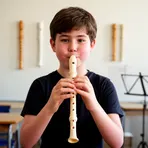
A simple wind instrument like a recorder that you blow into

A small wind instrument like a recorder with a mouthpiece you blow into

A wind instrument held horizontally that you play by blowing across a hole
How Simple

Surface Forms
Morphology
tabor + pipe
If a learner knows 'tabor' (a small drum) and 'pipe' (a wind instrument), the compound meaning—a pipe associated with or played together with a tabor—is directly inferable. This is a transparent noun–noun compound following common composition patterns (modifier + head), so a B1 learner who knows both constituents would understand its basic function and use.
Etymology
Tabor pipe comes from two small instruments: the pipe, a one-hand flute, and the tabor, a 'drum'. In old festivals a player used one hand for the pipe and the other to beat the tabor, so the name shows how one person made both 'melody' and rhythm.