

fipple pipe
- noun
- /ˈfɪpəl paɪp/
- Specialized
- Children often learn music by starting on a simple fipple pipe like the recorder.
Examples
-
The medieval musician played a fipple pipe during the court festivities.
-
She collects antique fipple pipes from different European countries.
-
She plays the fipple pipe beautifully.
-
The fipple pipes are made of wood.
-
Children often learn music by starting on a simple fipple pipe like the recorder.
-
The medieval musician played a fipple pipe during the court festivities.
-
She collects antique fipple pipes from different European countries.
Synonyms
 7
3.2
7
3.2

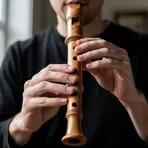
A small woodwind instrument you play by blowing into one end and covering holes
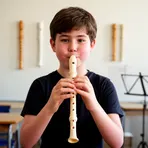
A simple wind instrument like a recorder that you blow into
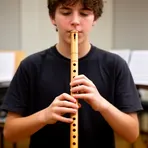
A tube wind instrument held vertically with finger holes that you blow into through a whistle mouthpiece
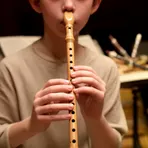
A small wind instrument like a recorder with finger holes
Surface Forms
Morphology
The phrase combines 'fipple' (a mouthpiece plug) with 'pipe' (a tubular wind instrument), so its meaning — a pipe fitted with a fipple mouthpiece (e.g., recorder or tin whistle) — is directly derivable from the constituents. Although 'fipple' is a specialized term, if a B1 learner knows both words the noun–noun composition is transparent and predictable.
Etymology
The noun fipple pipe comes from the small, whistle-shaped mouthpiece called a fipple that fits into a pipe and directs the air against a sharp edge to make a clear sound. So, the name refers to simple 'whistle' instruments like the recorder or tin whistle.