
syzygy
 1
9.9
1
9.9

- noun
- /ˈsɪzɪdʒi/
- Specialized
- Astronomers study syzygy to understand the gravitational effects during full and new moons.
- perigee syzygy
Examples
-
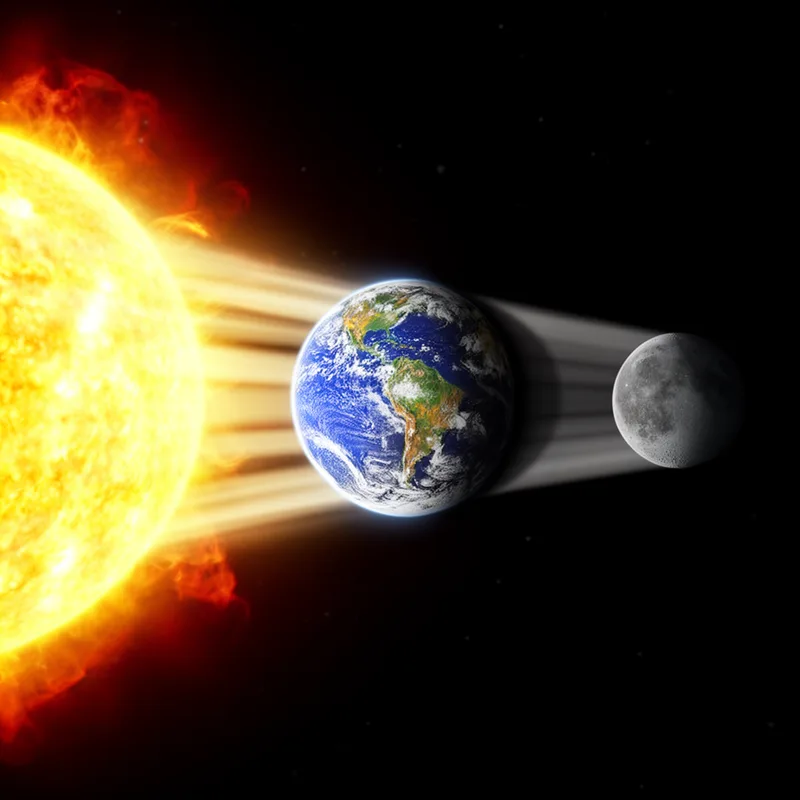
During a solar eclipse, the moon, Earth, and sun are perfectly aligned, a phenomenon known as syzygy.
-
They would label planets as "warm," "wet," "cold," etc. to describe the individual and combined effect of their conjunctions, syzygies, and oppositions on our growing seasons (primarily).
Blog text (25) -
They faced astounding words: hirsute, gnocchi, pulchritude, syzygy, which in their obscure but profound meaning seemed to elevate the audience to a higher level of spelling.
Fiction book (2000) -
The next syzygy will be observed when the three celestial bodies align in a straight line.
Synonyms
 20
6.8
20
6.8
When planets, the Sun and the Moon appear near each other in the sky
 4
8.6
4
8.6
When two planets or stars appear very close together in the sky
How Aligned
- Specialized
1
9.9

- Specialized
20
6.8
Surface Forms
Etymology
Syzygy comes from an old Greek word syzygia meaning 'yoked together', like a yoke that joins two animals. So syzygy is used for the Sun, Earth, and Moon when they line up in a straight line.