
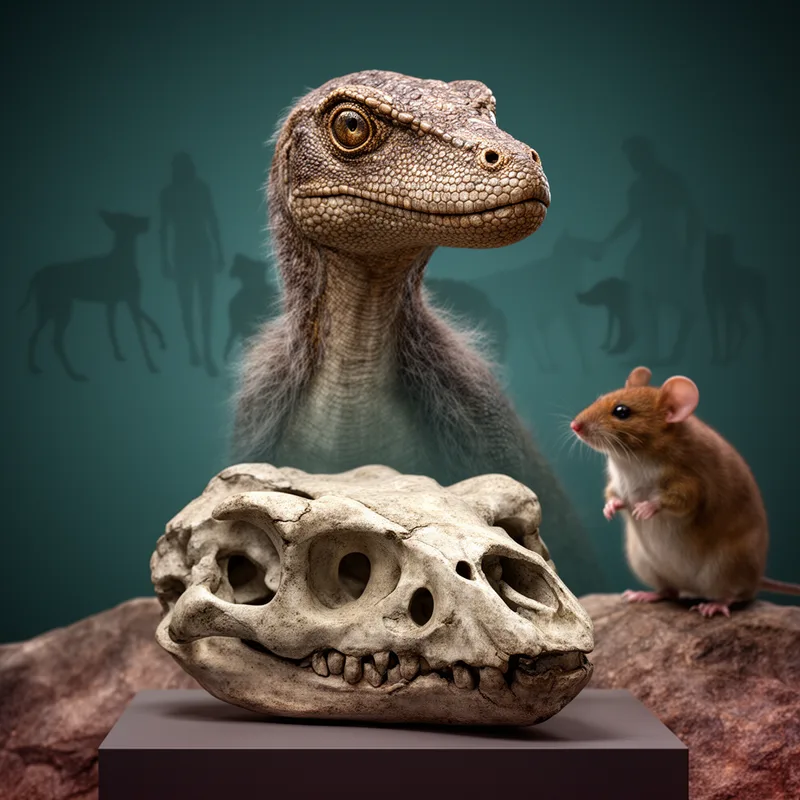
synapsid reptile
- noun
- /sɪˈnæpsɪd ˈrɛptaɪl/
- Specialized
- Early synapsid reptiles eventually gave rise to mammals during the course of evolution.
Examples
-
The synapsid reptile is notable for having a skull structure more similar to mammals than modern reptiles.
-
Paleontologists discovered the fossilized remains of a synapsid reptile in the ancient rock formation.
-
The synapsid reptile lived millions of years ago.
-
Many scientists study the evolution of synapsid reptiles.
-
Paleontologists discovered the fossilized remains of a synapsid reptile in the ancient rock formation.
-
Early synapsid reptiles eventually gave rise to mammals during the course of evolution.
-
The synapsid reptile is notable for having skull openings that differentiate it from other reptiles.
Synonyms

An extinct reptile-like animal with one pair of skull openings that led to mammals
Surface Forms
Morphology
This is a straightforward modifier+noun phrase: 'synapsid' specifies a subtype of 'reptile', so the combined meaning is simply a reptile that is synapsid. If a learner already knows the technical term 'synapsid' (an animal with a particular skull opening) and 'reptile', the meaning is directly inferable and follows regular English composition patterns.
Etymology
Synapsid reptile The name synapsid reptile comes from their skull: synapsid animals had a single pair of holes just behind the eyes, so their skulls looked more like early mammals than modern reptiles. That's why scientists call them the 'ancestors' of mammals.

