
synapse
 24
6.1
24
6.1

- noun
- /ˈsɪnæps/
- Specialized
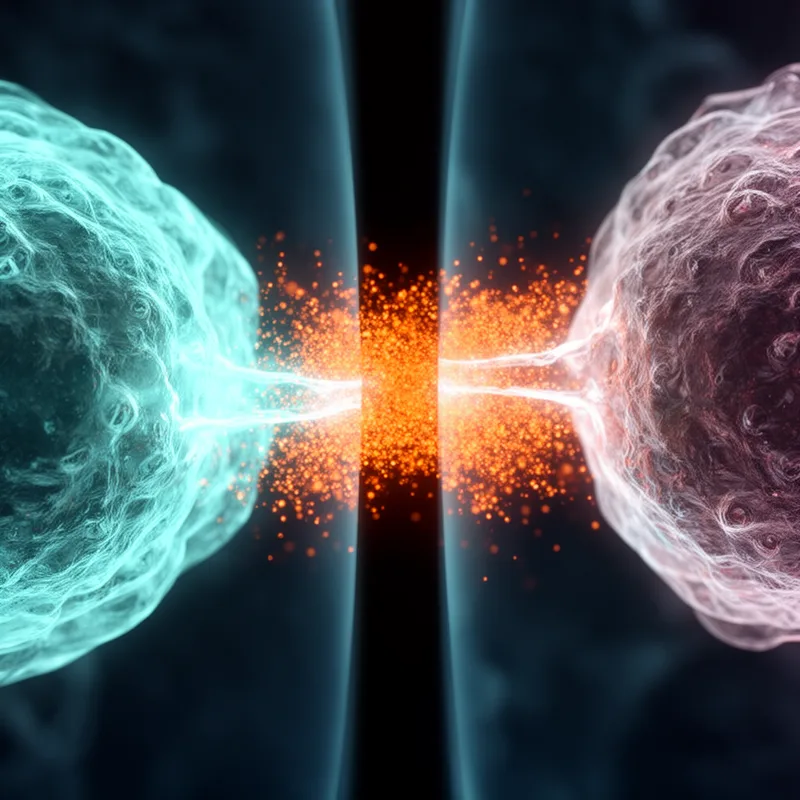
- So our understanding of memories is that they form at the synapses, like the junction between neurons.
- synapses with other neurons
- synapses in the brain
- neural synapses
Loading YouTube…
Watch on YouTubeAnd there's synapse gaps in between the brain cells.
- And there's synapse gaps in between the brain cells.
- One are what we call fast electrical synapses, ionotropic conduction.
- And grey matter contains neuronal cell bodies and connections between cells, synapses amongst other things.
- How does it work on the level of neurons and synapses in the brain?
- It's just electrodes and you know what happens across electrical synapses in your brain.
- There's a lot of different scales of design, so at the level of just one synapse, you can use conventional methods.
- And then you'll be, you'll deliver your synapses of fire a lot better.
- And then you'll be you'll deliver your synapses will fire a lot better.
Examples
-
Antidepressants have been presumed to work by affecting the messages transmitted across these synapses.
Academic text (2002) -
Messages carried across synapses by neurotransmitters represent just one type of communication that neurons receive.
Academic text (2002) -
How does it work on the level of neurons and synapses in the brain?
-
Between axon and dendrite, the synapse is the point of connection.
Academic text (2010) -
Neurotransmitters are released into the synapse, allowing communication between the nerve cells.
-
Learning new information causes changes at the synapse, making it stronger with repeated use.
-
Damage to the synapse can disrupt the transmission of signals between neurons and affect brain function.
How Complex
- Specialized
81
2.8

- Specialized

 1
4.7
1
4.7
- Specialized
56
6.3
- Specialized
24
6.1
Surface Forms
Morphology
synapse = syn + apse
Although historically analyzable as Greek combining forms, the components are not productive in modern English and the term is a technical biomedical specialist word, so learners cannot reliably derive its meaning from the parts.
Etymology
The word synapse comes from Greek parts syn- 'together' and haptein 'to clasp', so think of it as a tiny 'clasp' or meeting point where two nerve cells join to pass messages.