
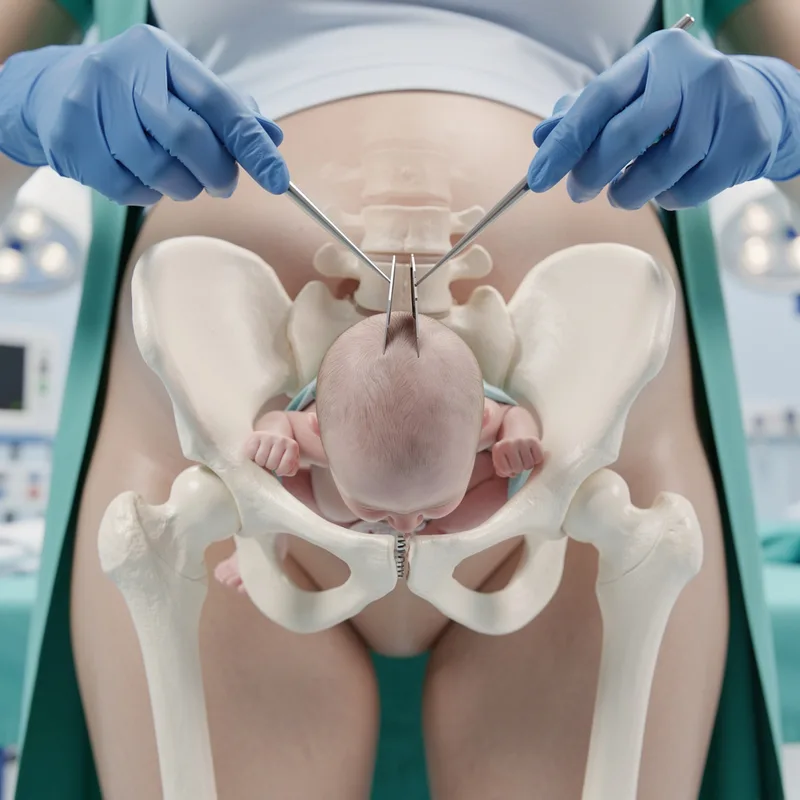
symphysiotomy
 1
9.9

- noun
- /ˌsɪm.fɪˈzaɪ.ə.t̬ə.mi/
- Archaic
- During difficult childbirth, the doctor may recommend a symphysiotomy to widen the pelvis for delivery.
Examples
-
The Walsh report found that 95% of the symphysiotomies were done in emergency circumstances.
Blog text (3) -
Symphysiotomy was mostly used in Ireland in the 1950s and 1960s at a time when contraception was illegal.
Blog text (3) -
There might be very rare times when a symphysiotomy is needed.
Blog text (3) -
So how then were women given symphysiotomy, ultimately followed by a section, and still manage to leave with a live child?
Blog text (3) -
Symphysiotomy is not mentioned, and I certainly had never heard of it before.
Blog text (3) -
I wrote in prior posts that symphysiotomy is not chainsaw surgery and that it is still practiced.
Blog text (3) -
An estimated 1,500 symphysiotomies were carried out in Irish hospitals during the period.
Blog text (3) -
The National Maternity Hospital revived symphysiotomy in 1944, and the surgery quickly spread to the Coombe.
Blog text (3) -
The Institute of Obstetricians and Gynaecologists has offered its unreserved sympathy and support to women who suffered complications following symphysiotomy procedures after giving birth.
Blog text (3) -
Symphysiotomy was used (in the Irish cases) to prevent uterine scarring that made more than 4 C-sections dangerous.
Blog text (3)
Surface Forms
Morphology
symphysiotomy = symphysis (opaque) = symphysi + otomy
Specialised medical formation combining the anatomical base 'symphysis' with the surgical suffix '-otomy', which is not transparent to average B1 learners.
Etymology
Symphysiotomy comes from the Greek parts symphysis meaning 'joined together' and -otomy meaning 'cutting'. So a symphysiotomy literally means 'cutting a join', which fits the operation where doctors cut the joint at the front of the pelvis to make more space for the baby during childbirth.