
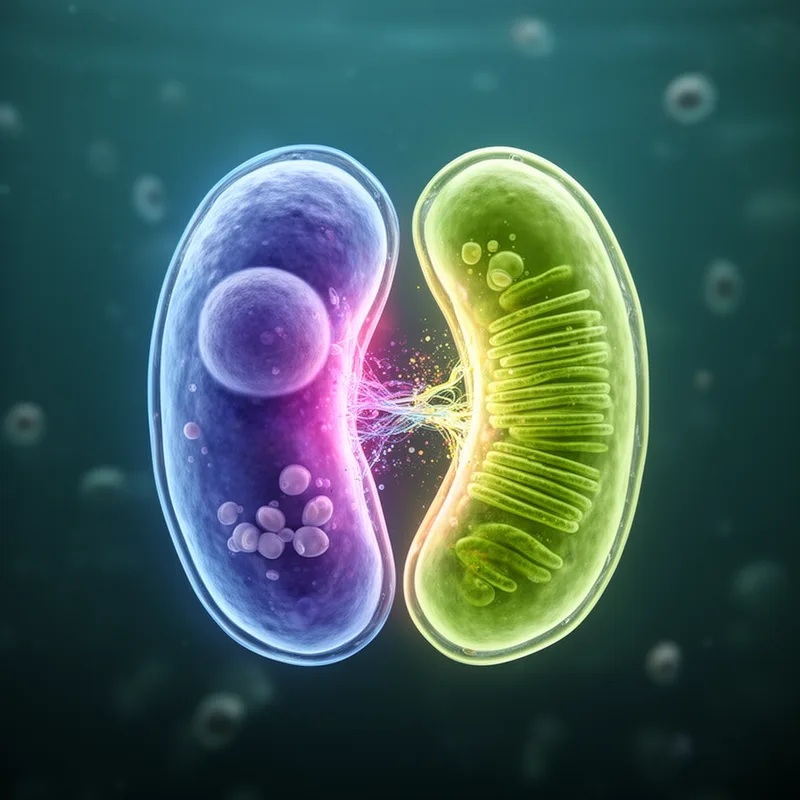
symbiogenetic


 1
9.9
- adjective
- /ˌsɪmˌbaɪoʊdʒəˈnɛtɪk/
- Specialized
- That would make cyanobacteria and proteobacteria the same species, making the separate symbiogenetic origin of mitochondria and chloroplasts problematic.
- symbiogenetic origin
Examples
-
Certain plants exhibit symbiogenetic relationships, merging with fungi to enhance nutrient absorption.
-
They say that species are different only if they are chimeras of a different set of symbiogenetic partners.
Academic text (2003) -
The other, more trivial symbiogenetic events were replacements of a few dinoflagellates' own chloroplasts by foreign ones.
Academic text (2003) -
The authors imply that 10 million to 30 million species of eukaryotes evolved by symbiogenesis, yet evidence exists for only about six symbiogenetic events in the whole history of life.
Academic text (2003) -
The authors devote only about two sentences to the symbiogenetic origins of mitochondria and chloroplasts; that is all the book has to offer on the well-established cases of symbiogenesis.
Academic text (2003) -
When Ris, an excellent electron microscopist, revived the symbiogenetic theory, the close resemblance in membrane organization of chloroplasts and cyanobacteria impressed him as much as that of their DNA.
Academic text (2003) -
The study focused on symbiogenetic processes, where two organisms combine to create a new species.
-
Research on symbiogenetic evolution reveals how some animals develop through the fusion of distinct cellular organisms.
Surface Forms
Morphology
symbiogenetic = symbiogenesis (semi-transparent) = symbio + gen + etic
The adjective is clearly derived from the technical noun 'symbiogenesis', but the combining forms are specialized scientific morphemes that are not fully transparent to average learners.
Etymology
Symbiogenetic comes from symbio- meaning 'living together', seen in symbiosis, and -genetic from genesis meaning 'origin' or 'birth'. So symbiogenetic describes when two different living things join to make a new kind of life, which is why scientists use it for events that created things like mitochondria and chloroplasts.