
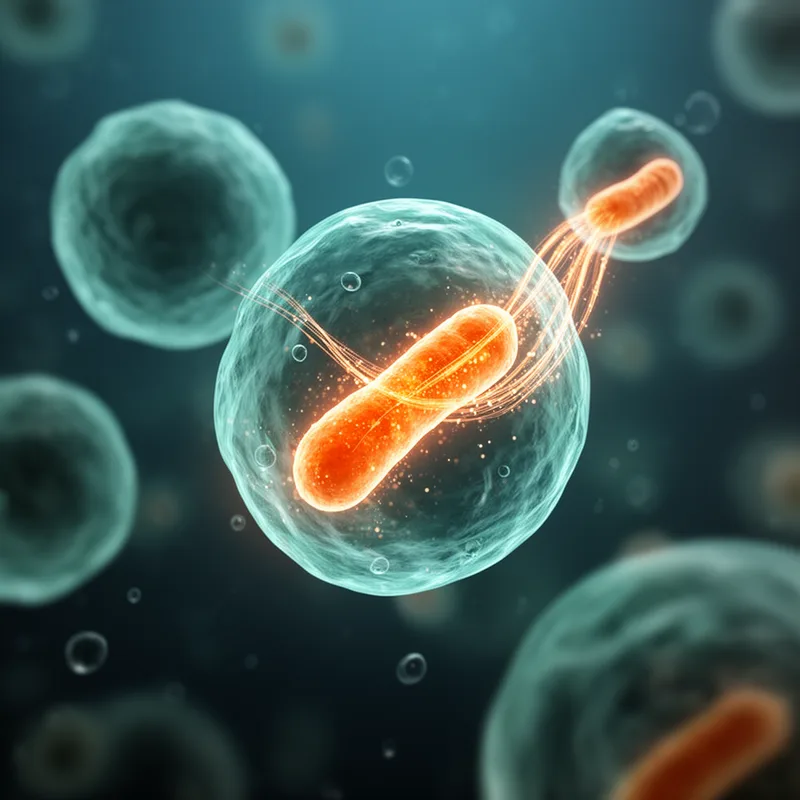
symbiogenesis
 1
9.9

- noun
- /ˌsɪmˌbaɪoʊˈdʒɛnɪsɪs/
- Specialized
- He realized that symbiogenesis was a way of acquiring not only foreign genomes but also foreign membranes.
Examples
-
Through symbiogenesis, two different species combined their genetic material to create a completely new organism.
-
The authors never so much as mention the central role of novel protein targeting in symbiogenesis.
Academic text (2003) -
Cells from different species fused to create a third novel species (symbiogenesis).
Blog text (30) -
Lynn Margulis seems never to have appreciated or accurately discussed the central roles of membranes in symbiogenesis in her numerous popular writings on the subject.
Academic text (2003) -
The authors imply that 10 million to 30 million species of eukaryotes evolved by symbiogenesis, yet evidence exists for only about six symbiogenetic events in the whole history of life.
Academic text (2003) -
Mereschkowsky invented the term symbiogenesis for such permanent mergers of phylogenetically disparate organisms into a single chimeric one.
Academic text (2003) -
Even if we were to equate symbiogenesis with the acquisition of a novel symbiont, as the authors often seem to do, there would be immensely fewer such acquisitions than recognized morphological species.
Academic text (2003) -
The authors devote only about two sentences to the symbiogenetic origins of mitochondria and chloroplasts; that is all the book has to offer on the well-established cases of symbiogenesis.
Academic text (2003) -
The process of symbiogenesis led to the formation of a new species with traits from both parent organisms.
-
In many plants, symbiogenesis occurs when beneficial bacteria and the plant roots merge to enhance nutrient absorption.
Surface Forms
Morphology
Etymology
The word symbiogenesis comes from the parts symbio- meaning 'living together', as in symbiosis, and -genesis meaning 'origin' or 'beginning'. That's why symbiogenesis names the process where two different life forms join and create a new kind of organism.