
syllabic
- adjective
- /sɪˈlæbɪk/
- Literature
- Indeed, the poem's syllabic asceticism becomes most pronounced at just the juncture when the speaker is made to confront the reality of postlapsarian.
- syllabic meter
- accentual-syllabic
Examples
-
In syllabic chant, each syllable has just one note, and in syllabic chant the musical range tends to be rather narrow.
-
"As soon as Williams had ceased to imitate Keats and had abandoned rhyme and accentual-syllabic meter, he began to cast about for something to take its place.
Fiction book (2000) -
However, like the Italian sonnet, it does demand rather a lot of syllabic repetitions for a rhyme-poor language like English.
Academic text (2003) -
He rejected accentual-syllabic meter and he rejected free verse.
Fiction book (2000) -
These include three different rhyme schemes: ababcc, abbaba, and aabccb, and both accentual-syllabic and accentual meters.
Academic text (2005) -
Put another way, in his youth he began to imitate H.D., Williams, and others without having been immersed in accentual-syllabic meters to the extent they had, and without feeling the same urgency to escape nineteenth-century metrics.
Fiction book (2000) -
On the level of the individual line of traditional accentual-syllabic meter, a spondee is a spondee because it is not an iamb or a trochee, and the same is true of a pyrrhic.
Fiction book (2000) -
Students at the decoding stage sight-read text and music simultaneously, attending to the syllabic or melismatic relation of the text to pitch or rhythm changes; use articulation of individual consonants and vowels as they relate to specific musical pitches.
Academic text (2002) -
The poem's structure is strictly syllabic, emphasizing the number of syllables in each line.
-
In her latest work, the author experimented with syllabic verse to create a unique rhythm.
Antonyms


Compounds

- Specialized
A writing system where each symbol stands for a syllable like "ka" or "mo"
Surface Forms
Morphology
Etymology
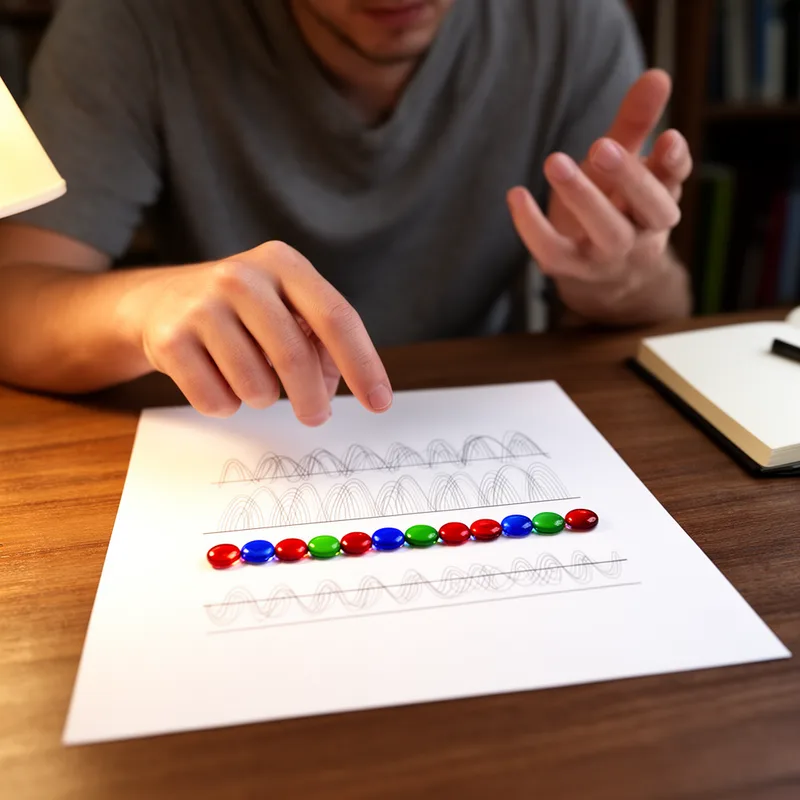
Syllabic comes from syllable, a unit of sound or 'beat' in a word. So a syllabic poem measures its lines by counting these syllables (like a haiku), not by stress, which gives the poem its rhythm.