
sweetbrier


 1
9.5
1
9.5
- noun
- US
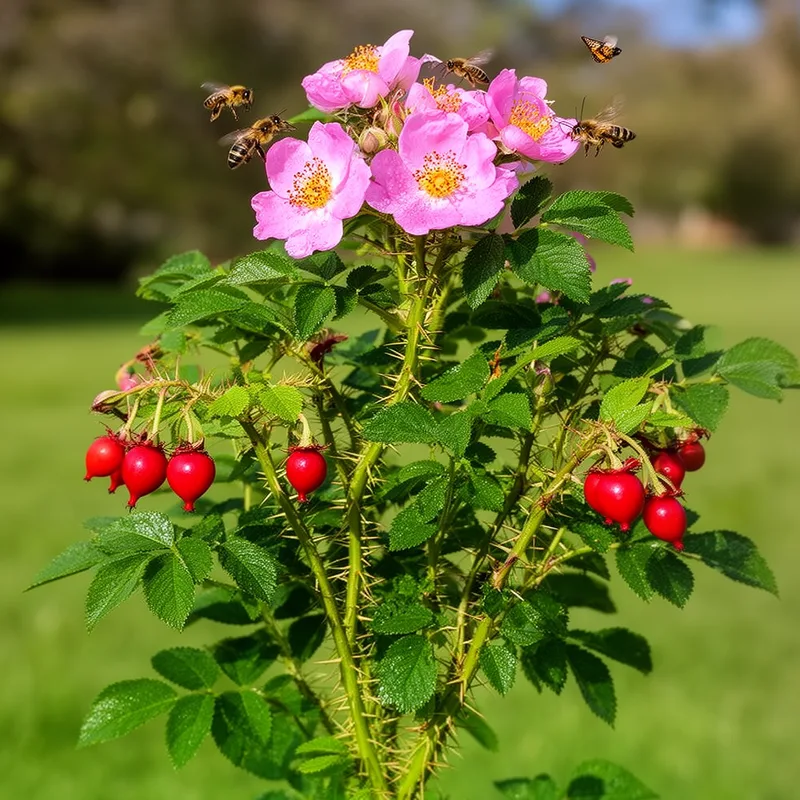
- Children picked the bright red hips from the sweetbrier bushes that dotted the hillside.
Examples
-
Clusters of pink sweetbrier blossoms attract bees and butterflies to this corner of the park.
-
The sweetbrier has beautiful pink flowers that attract many bees.
-
The garden's sweetbrier filled the air with a lovely, subtle fragrance each spring.
-
The sweetbrier bloomed beautifully in the garden.
-
I love the smell of sweetbrier in the summer.
-
In the garden, the sweetbrier's fragrant leaves filled the air with a wonderful scent.
-
During autumn, the sweetbrier produces bright scarlet hips that are appealing to birds.
Synonyms
 1
9.9
1
9.9
A wild rose with prickly stems, sweet-smelling leaves, pink flowers, and small red fruit

A wild rose with prickly stems, sweet-smelling leaves, bright pink flowers, and red fruit
A wild rose with prickly stems, sweet-smelling leaves, pink flowers, and red fruit
Surface Forms
Morphology
Etymology
The word sweetbrier combines sweet ('pleasant, fragrant') and brier ('thorny shrub'). So it names a prickly wild rose that is known for its sweet smell and bright red hips.