
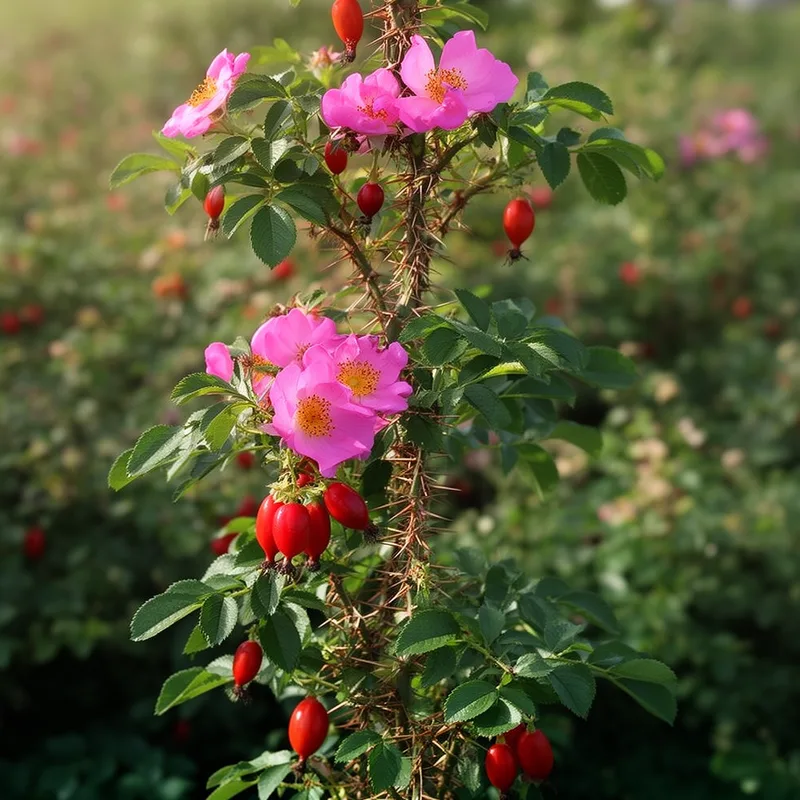
Rosa eglanteria
- noun
- Specialized
- The garden featured a beautiful Rosa eglanteria hedge, famous for its fragrant leaves.
Examples
-
She planted Rosa eglanteria to attract birds with its scarlet hips in autumn.
-
The Rosa eglanteria blooms beautifully in the spring.
-
Many poets have referred to the delicate scent of Rosa eglanteria in their verses.
-
Look at that Rosa eglanteria!
-
The garden featured a beautiful Rosa eglanteria hedge, famous for its fragrant leaves.
-
She planted Rosa eglanteria to attract birds with its scarlet hips in autumn.
-
Many poets have referred to the delicate scent of Rosa eglanteria in their verses.
Synonyms


 1
9.5
1
9.5
A wild rose with prickly stems, sweet-smelling leaves, pink flowers, and red hips
 1
9.9
1
9.9
A wild rose with prickly stems, sweet-smelling leaves, pink flowers, and small red fruit
A wild rose with prickly stems, sweet-smelling leaves, pink flowers, and red fruit
Surface Forms
Morphology
Rosa + eglanteria
The element 'Rosa' transparently signals the genus (a rose), so a learner who recognises that part can infer the expression denotes a type of rose. However 'eglanteria' is not a common, semantically transparent English word (and is a species epithet), so the specific attributes (sweet briar, fragrant leaves, hips) are not derivable from the parts, making the overall expression only partially transparent.
Etymology
Rosa eglanteria is the name of a wild rose also called 'sweet briar'; Rosa means 'rose' and eglanteria comes from an old word for 'sweet briar' because the leaves smell sweet when you rub them and the plant makes bright red 'hips' that attract birds. So the name points to the plant's sweet scent and red fruits.