

to surmount
 1
6.8
1
6.8

- verb
- /sərˈmaʊnt/
- After weeks of practice, she finally managed to surmount the tallest rock climbing wall in the gym.
- surmounted the highest peak
Examples
-
He felt a sense of accomplishment when he could surmount the steep trail to the mountain peak.
-
Another scene, this one with somewhat more complex imagery, portrays a dog surmounting a horse; an umbrella in turn surmounts the dog (Fig. 5).
Academic text (1990) -
With this card, I'll surmount the God Cards and stand atop the apex of duel monsters!
-
All hard places can be surmounted and the summit reached by the Divine Goat—a symbol meaning group effort.
Blog text (14) -
The surmounting ridge ran all the way from the point called Boutillier to Petionville, where it merged into other such formations.
Academic text (1990) -
How swiftly Caesar had surmounted the icy Alps... ...and in his mind conceived immense upheavals, coming war.
-
I'm an occasional trekker and dedicated armchair mountaineer who has made it a goal to surmount the massif of books written about climbing Mount Everest.
Blog text (34) -
The black figure at the right, meanwhile, four rectangles high, possesses a head and feet of equal size and a triangular body in between, with two identical dancers surmounting three more standing symmetrically below.
Academic text (2003) -
The bows on her sleeves dance with mischief, her pearl choker a high marble wall to be surmounted for the pleasure of her throat, her exhausted body all things to all men.
Fiction book (1990) -
To the students of any art, there is always a peculiar charm when the highest difficulties are surmounted with such ease that the consummate art is hidden to all who know not the magic password to unveil it (p. xlii).
Academic text (2017)
Synonyms
 718
1.0
718
1.0
To move upward into the air, like smoke or mist
 442
1.0
442
1.0
To move to a higher position
 54
4.0
54
4.0
To move upward to a higher place, for example up a hill or into the sky
 46
1.5
46
1.5
To reach the highest point or part of something
 22
5.5
22
5.5
To reach the highest point, as a wave or feeling
 15
3.1
15
3.1
To climb up a wall or ladder to reach a higher place
 6
3.1
6
3.1
Get to the top of a mountain or the highest point in your career
 5
6.2
5
6.2
To reach the top of a mountain
 5
1.6
5
1.6
To rise to a higher position, for example at work or on music charts

 1
8.3
1
8.3
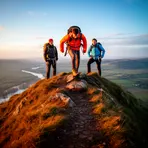
To reach the top of a hill or mountain
 1
6.5
1
6.5
To be higher than something so you can look down at it

To climb a mountain
Antonyms

How High

Surface Forms
Morphology
surmount = mount (transparent) = sur + mount
The literal sense 'to reach the highest point' follows directly from 'sur' (over/on top) + 'mount' (to climb), so learners who know 'mount' can infer this sense.
Etymology
Surmount comes from the parts sur- 'over' and mount 'to climb', just like mountain, so to surmount a ridge or peak is to reach its top after climbing.