
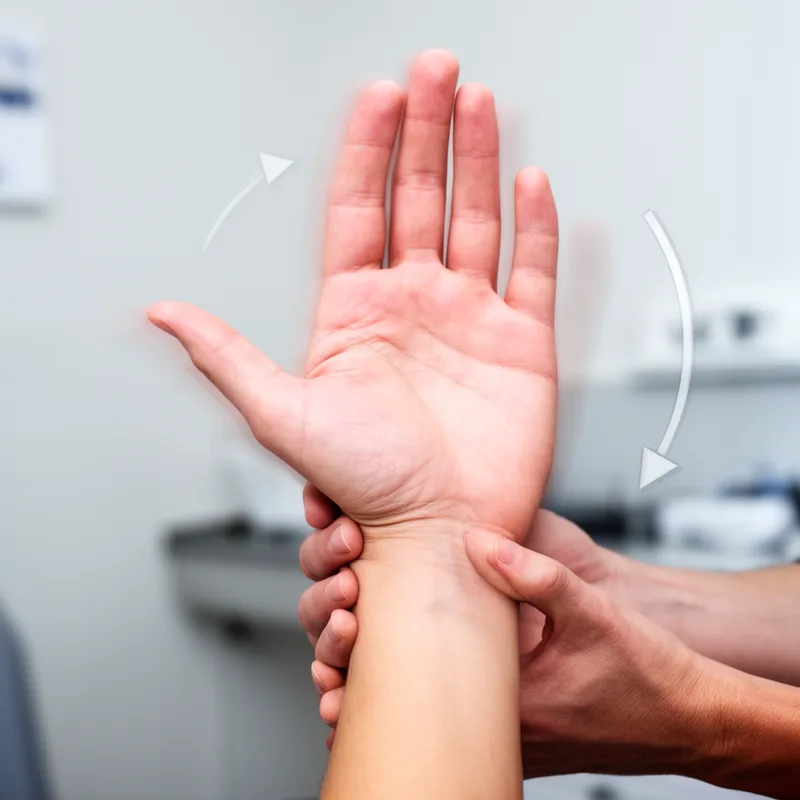
supination


 1
9.6
- noun
- /ˌsuːpɪˈneɪʃən/
- Specialized
- During a fitness class, the instructor emphasized the importance of proper supination for better balance and technique.
- supination and pronation
Examples
-
The dorsiflexion stirrup is now replaced with the pronation/supination measuring sling.
Academic text (1991) -
PHOTO (BLACK & WHITE): Figure 10. Supination nylon loop in use with the goniometer in place.
Academic text (1991) -
Pronation and supination (Figures 7 through 10)
Academic text (1991) -
All 26 were tested for dorsiflexion and heel compression, and 8 for proration, supination, and ankle torsion.
Academic text (1991) -
The Jaipur foot is capable of 26-29 degrees of proration and 17-22 degrees of supination at a peak load of 40 kg (Table 3).
Academic text (1991) -
For pronation, the sling is adjusted so that it pulls on the lateral border of the foot (Figure 7 and Figure 8); for supination, it is adjusted so that it pulls on the medial border (Figure 9 and Figure 10).
Academic text (1991) -
The Jaipur foot is capable of proration and supination (always associated with dorsiflexion), and torsion in a transverse plane around a vertical axis passing through the ankle.
Academic text (1991) -
Elbows and wrists: Establishing the movement of elbows and wrists, covering elbow flexion/extension, forearm pronation/supination, and wrist flexion/extension.
Academic text (2010) -
Understanding supination can help athletes improve their performance and reduce the risk of injury.
-
In yoga, achieving the right hand position involves a gentle supination to open the palms upward.
Antonyms
How Rotated

Surface Forms
Morphology
Etymology
Supination comes from the old Latin verb supinare, meaning 'to lie on the back', and is related to the English word supine. So supination is the movement that turns the hand or forearm so the palm 'faces up' or forward, like when you lie on your back.