
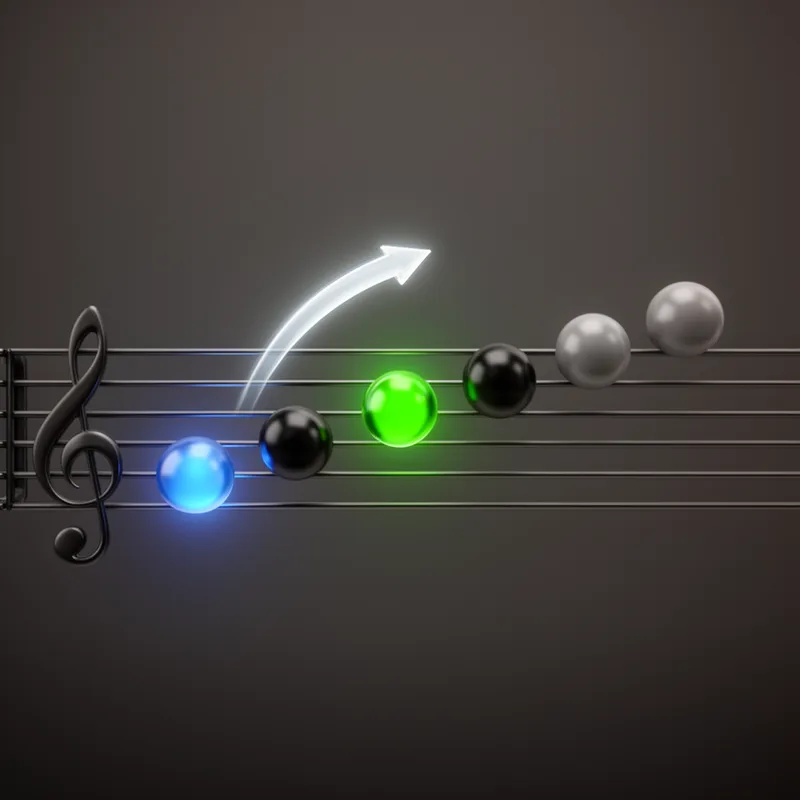
supertonic
- noun
- /ˌsuːpərˈtɒnɪk/
- Specialized
- In the diatonic scale of C major, the supertonic is the note D.
Examples
-
The AP course will cover material ranging from root progressions to supertonic sevenths and their inversions.
Academic text (1993) -
They can progress to learning a repertoire of music that includes subdominant harmony, then mediant, submediant, supertonic, and secondary dominant, and eventually more chromatic harmonies.
Academic text (1999) -
So for minor keys that have a key signature containing sharps, the last sharp will be on the second scale degree or supertonic.
Academic text (2001) -
When I was a year old, I could sing Three Blind Mice, and before I was three, I knew that the major chord on flattened supertonic was D flat, F and A flat, in the key of C, of course.
-
Musicians often use the supertonic to create tension before resolving to the tonic.
-
The supertonic note adds richness to melodies and harmonies in various music genres.
Surface Forms
Morphology
Etymology
Supertonic is made of the part super- meaning 'above' and tonic meaning the 'home note' or main note of a scale, and you can think of super- like in superhero to remember 'above'. So the supertonic is the note just one step 'above' the tonic, which is why it is the second degree of the scale.

