

superscript
 1
6.7
1
6.7

- noun
- /ˈsuːpərˌskrɪpt/
- Specialized
- The superscript i indicates that coefficients are different for constrained versus unconstrained manufacturers.
- row with superscript
- same superscript
- superscript letter
Examples
-
Cite references in the text in numerically consecutive order with superscript numbering.
Academic text (2012) -
Means with the same superscript were not significantly different.
Academic text (1994) -
- I have a superscript "th" here.
-
Superscript S = code used only in student data; superscript T = code used only in teacher data.
Academic text (2015) -
And there's this, the little superscript "th."
-
In the same rank, data with different superscript letters indicate a statistically significant difference.
Academic text (2015) -
The superscript designates control procedures identified as completely automated or completely non-automated.
Academic text (1998) -
We recommend that authors use symbols, such as asterisks and superscript numbers or letters, to identify data entries that merit some type of explanatory note.
Academic text (2011) -
The superscript "m" is even more restrictive; it's reserved for isomers with half-lives of more than a millisecond.
Academic text (2006) -
The footnote was marked with a superscript number to indicate the reference.
Synonyms
 6
8.6
6
8.6
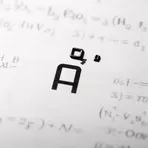
A small letter or number printed above and to the side of another
Antonyms

- Specialized

 1
6.8
1
6.8
A small sign written below and to the right of a letter or number to show how many
How High
- Specialized
1
6.7

- Specialized
Surface Forms
Morphology
Etymology
Superscript comes from super meaning 'above' and script meaning 'to write', the same 'script' in 'manuscript'. So a superscript is a small number or symbol written above and to one side of another character, like a footnote number or an exponent.