
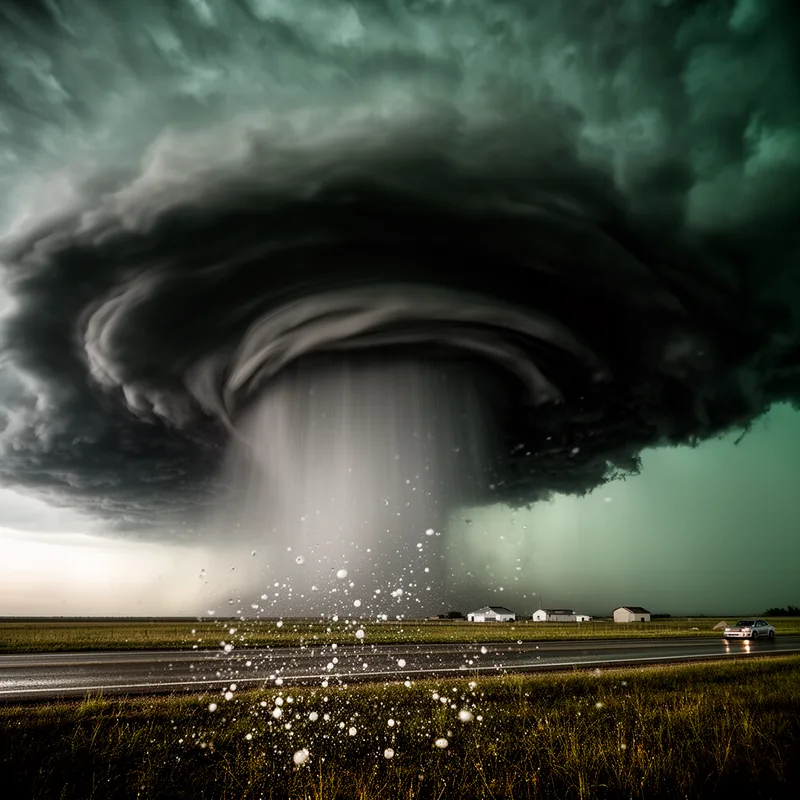
supercell
 3
7.4
3
7.4

- noun
- /ˈsuːpərˌsɛl/
- Specialized
- The supercell thunderstorm developed rapidly, intensifying with swirling winds.
- supercell thunderstorms
Examples
-
Scientists believe that a downdraft wrapping around the rear of the supercell is critical to bringing the rotation to the ground and that the temperature of the downdraft might determine whether the storm merely produces strong winds or a monster tornado.
-
Thinner sheet material can be collapsed with a high pressure from the supercell, so you will want to make sure to choose the right type of ducting.
-
We have opportunity for significant supercells, maybe significant tornadoes today.
-
Winds moving in different directions and different speeds can rotate a storm into what is called a supercell.
-
Supercells are characterized by heavy wind, rain, and hail, along with a vortex of swirling air several kilometers wide.
Blog text (2) -
Other than reports of picturesque supercell thunderstorms and impressive lightning events, the most significant events reported in this region included a shredded tire and a blown automobile engine.
Academic text (1999) -
McCaul, E. W., Jr., and M. L. Weisman. 1996. Simulations of Shallow Supercell Storms in Landfalling Hurricane Environments. Monthly Weather Review 124(3): 408-429.
Academic text (2011) -
A supercell can produce severe weather, including tornadoes and hail.
-
Meteorologists closely monitor supercells because of their potential to spawn dangerous tornadoes.
Synonyms
 73
1.0
73
1.0
A storm with thunder and lightning that often has heavy rain or hail
Antonyms




How Severe

Surface Forms
Morphology
Etymology
Supercell comes from super ('above' or 'over') and cell ('small unit', like a 'cell phone' or a honeybee's cell), so the name fits a storm that is bigger and stronger than a normal storm cell and often has a rotating updraft that can make tornadoes or large hail.