

to sum up
 1
2.1
1
2.1

- phrasal verb
- /sʌm ʌp/
- Cognitive psychologist Steven Pinker has nicely summed up the problem presented by this experimental data in his 2002 book The Blank Slate:
Loading YouTube…
Watch on YouTubeAnd to do that, I just have to sum up all the amplitudes that lead to that state.
- And to do that, I just have to sum up all the amplitudes that lead to that state.
- If assets can be broken down into their different component parts and then summed up to a whole, so could a portfolio.
Examples
-
The words of Grace Sherwood, in a pamphlet issued in 1932 by Ryan's Social Action Department, sum up the predominant view nicely.
Academic text (2005) -
The interior angles of a triangle always sum up to what degree?
-
" Let's sum up the apparent mistakes evident in just this one graph.
Blog text (5) -
To sum up, altruistic, self-related, and self-fulfillment goals are prevalent in the whole sample.
Academic text (2006) -
To sum up, biblical annotations are more significant for biblical interpretation and theological reflection and more varied in their functions than commonly realized.
Academic text (2006) -
John McGarry and Brendan O'Leary sum up these various explanations by grouping them into either exogenous or endogenous variants.
Academic text (2006) -
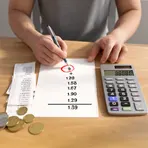
To find the total cost of the groceries, we need to sum up the prices of each item.
-
Please sum up the results of the experiment before the meeting begins.
-
At the end of the lecture, the teacher will sum up the main points discussed.
Synonyms
 934
1.0
934
1.0
Put numbers or amounts together to find their total
 168
1.0
168
1.0
To add two or more numbers to find their total
 118
1.0
118
1.0
Find the total of several numbers
 65
1.0
65
1.0
To add numbers together to find the whole amount
 22
3.7
22
3.7
Collect small amounts until they become a larger total
 18
3.0
18
3.0
To count or add things like points and votes
 7
1.0
7
1.0
To calculate the total of two or more numbers by putting them together

 1
4.3
1
4.3
Add numbers to find the total
 1
8.8
1
8.8
To add numbers together to find the total
 1
7.4
1
7.4
Join numbers or ideas to make one whole
 1
8.4
1
8.4
Add numbers in a column to find the total

To add a group of numbers to find the total

To add small amounts together to make a total
Antonyms

Surface Forms
Morphology
The verb meaning 'to find the total' is directly derivable from 'sum' (total/add) combined with the particle 'up' which commonly signals aggregation or completion; this compositional pattern is regular in English and found across languages, so a B1 learner who knows the constituents can infer the meaning. Even the related sense 'to summarize' is similarly built from 'sum' (main point/total) + 'up' (bring together), so the expression is broadly transparent.
Etymology
Sum up comes from adding numbers: the word sum means the result of adding and up shows you put the parts together, like piling coins into one heap to count them. That's why it means 'to add together'.