
subsistence farming
 1
4.5
1
4.5

- noun
- /səbˈsɪstəns ˈfɑrmɪŋ/
- Cear has a long history of government intervention to reduce the vulnerability of the rural subsistence farming population to climate variability.
- land for subsistence farming
- labor from subsistence farming
Examples
-
In several regions, the expansion of both subsistence farming and commercial agriculture continues to extend the agricultural frontier.
Academic text (2009) -
Poverty, combined with the enormous demands rural housekeeping and subsistence farming placed on women, led to increased child neglect.
Academic text (1998) -
People there lived through subsistence farming and all of a sudden it's gone.
-
Subsistence farming, on the other hand, has always been a known means of survival here.
Academic text (2008) -
Economy: The majority of South Sudan's adult population still engages in subsistence farming.
Blog text (20) -
So, we know first-hand about the importance of subsistence farming and procuring meat from the wild instead of a butcher shop.
Academic text (2008) -
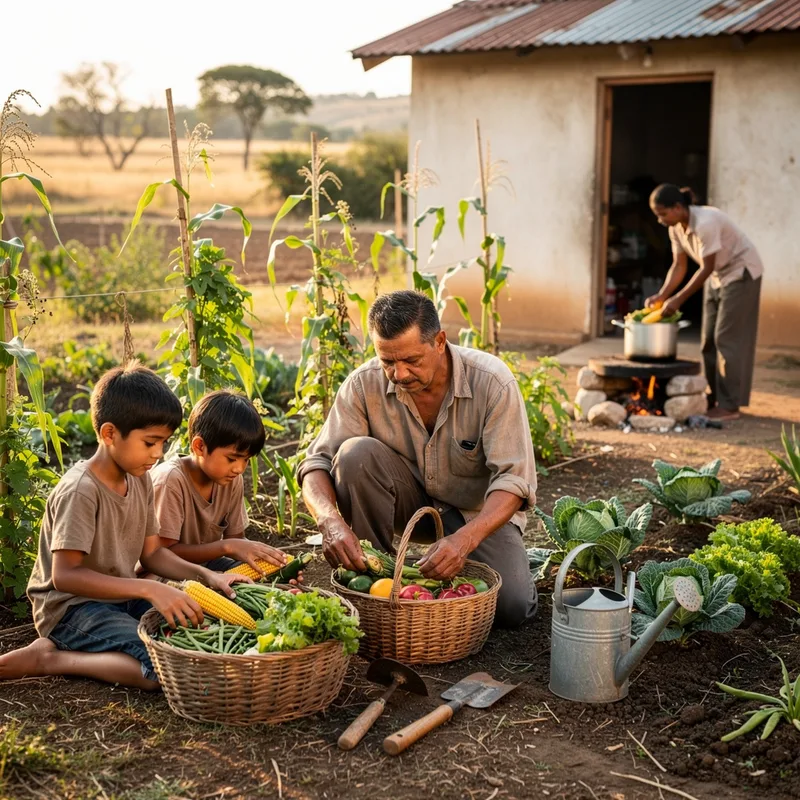
Many families in rural areas depend on subsistence farming to feed themselves with the few crops they can grow.
-
In developing regions, subsistence farming is often the primary source of food, as farmers grow just enough for their own consumption.
-
The practice of subsistence farming allows farmers to sustain their households, but leaves little to sell at local markets.
Synonyms
 1
5.5
1
5.5
Living on your own land growing food and keeping animals to meet your needs
Antonyms
How Self-Sufficient
1
4.5

Surface Forms
Morphology
The meaning is directly compositional: 'subsistence' (basic livelihood to stay alive) + 'farming' (cultivating crops/raising animals) yields farming carried out to meet one’s own basic needs rather than for market sale. This construction is cross-linguistically common and follows a straightforward modifier-head pattern, so a B1 learner who knows both constituents will readily infer the MWE meaning.
Etymology
Subsistence farming comes from the word subsistence, meaning the basic things needed to live, and farming, meaning growing food. It paints a simple picture of a family growing just enough crops and keeping a few animals for themselves, not to sell, so it means farming 'to survive'.