
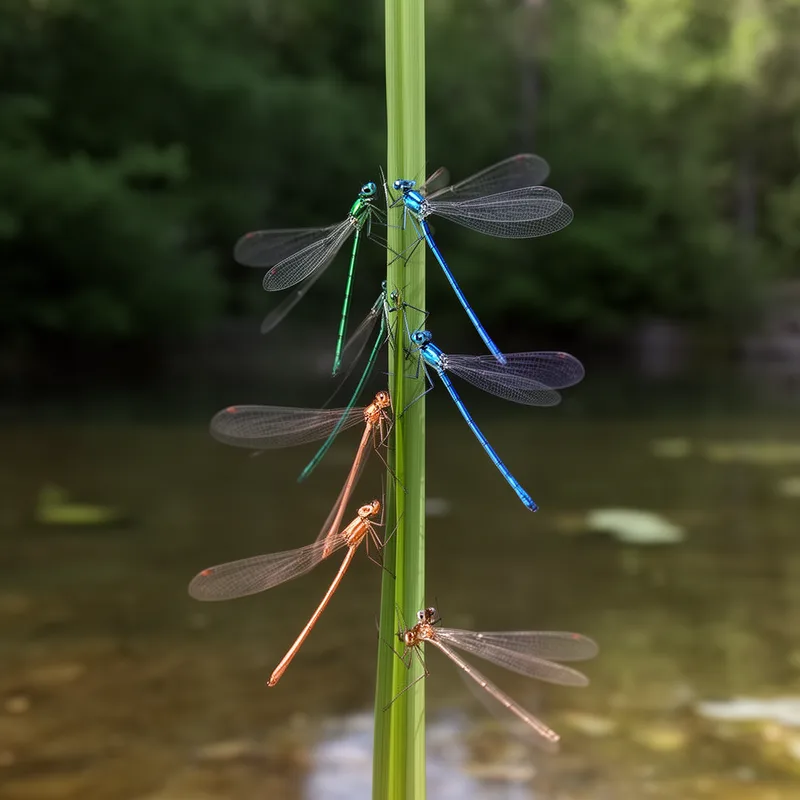
suborder Zygoptera
- noun
- /ˈsʌbˌɔrdər ˈzaɪɡəˌptərə/
- Specialized
- Unlike dragonflies, insects in the suborder Zygoptera typically hold their wings together when at rest.
Examples
-
The suborder Zygoptera comprises various species known for their slender bodies and delicate wings.
-
The suborder Zygoptera includes all species commonly known as damselflies.
-
Scientists discovered a new member of the suborder Zygoptera in the rainforest.
-
The suborder Zygoptera includes many species of damselflies.
-
Did you know that the suborder Zygoptera is different from dragonflies?
-
In nature, members of the suborder Zygoptera are often found near freshwater habitats.
-
Many enthusiasts enjoy observing the beautiful colors of insects in the suborder Zygoptera.
Synonyms

Small flying insects like dragonflies with slender bodies and wings of equal size that they hold together when resting
Surface Forms
Morphology
The phrase is fully compositional: 'suborder' names a taxonomic rank and 'Zygoptera' is the taxon label, so the meaning ('the taxonomic subgroup called Zygoptera, i.e. damselflies') is directly derivable from the constituents. This follows a standard, cross-linguistic biological naming pattern, so a learner who knows both parts would understand the MWE.
Etymology
The noun suborder Zygoptera comes from old Greek words: zygo- 'paired' and -ptera 'wings'. That idea fits damselflies, because their front and back wings look very similar and they often hold them together, so the name points to their 'paired wings'.

