

Zygoptera
- noun
- /ˈzaɪɡəˌptərə/
- Specialized
- Scientists observed several species of Zygoptera near the riverbank.
Examples
-
Unlike dragonflies, members of Zygoptera hold their wings together when at rest.
-
The Zygoptera are fascinating insects to observe.
-
The colorful wings of Zygoptera make them easy to spot in wetlands.
-
Did you know that Zygoptera have wings of equal size?
-
The suborder Zygoptera is known for the exquisite beauty of its damselfly species.
-
Scientists have identified many unique traits within the Zygoptera, particularly their equal-sized wings.
-
In the wetlands, Zygoptera can often be spotted gracefully hovering over the water.
Synonyms


 1
8.1
1
8.1
A small, slender insect like a dragonfly that rests with its wings folded together and does not sting
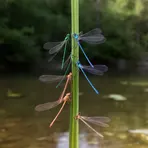
A group of insects that includes damselflies, small thin flying insects
Compounds
- Specialized
A group of insects that includes damselflies, small thin flying insects
Surface Forms
Morphology
Zygoptera = zygo + ptera
The term is built from Greek combining forms ('zygo-' = paired, '-ptera' = wings) that are not standalone English words, so an average B1 learner cannot derive the meaning from familiar English bases.
Etymology
Zygoptera comes from Greek parts zygo- meaning 'joined' or 'yoked' and -ptera meaning 'wings'. So, Zygoptera literally means 'joined wings', which fits the group of damselflies because they have slender bodies and two wings of the same size that they often hold together when resting.