

suborder Gorgonacea
- noun
- Specialized
- The suborder Gorgonacea contains many spectacular sea fans found in tropical oceans.
Examples
-
Researchers studied the biodiversity within the suborder Gorgonacea to understand reef ecosystems better.
-
The suborder Gorgonacea includes various species of soft corals.
-
Red corals from the suborder Gorgonacea are prized for their beauty and ecological importance.
-
Did you know that the suborder Gorgonacea contains red corals?
-
Red corals from the suborder Gorgonacea are prized for their beauty and ecological importance.
-
The suborder Gorgonacea includes various species of soft corals that form intricate structures in the ocean.
-
Researchers studied the biodiversity within the suborder Gorgonacea to understand its role in marine ecosystems.
Synonyms

A group of soft corals like red coral and sea fans
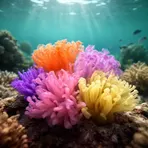
A group of soft sea corals that do not make hard skeletons
Surface Forms
Morphology
The phrase is fully compositional: 'suborder' names a taxonomic rank and 'Gorgonacea' names a group of colonial corals, so together they denote the taxonomic suborder containing those corals. Taxonomic noun + name constructions are regular and cross-linguistically common, so a B1 learner who knows both constituents can infer the meaning.
Etymology
Suborder Gorgonacea may come from the Gorgons of Greek myth because these corals grow in long, twisting branches that looked like wild hair. That's why the name refers to the tree-like groups of soft corals, such as 'sea fans' and 'red corals'.

