
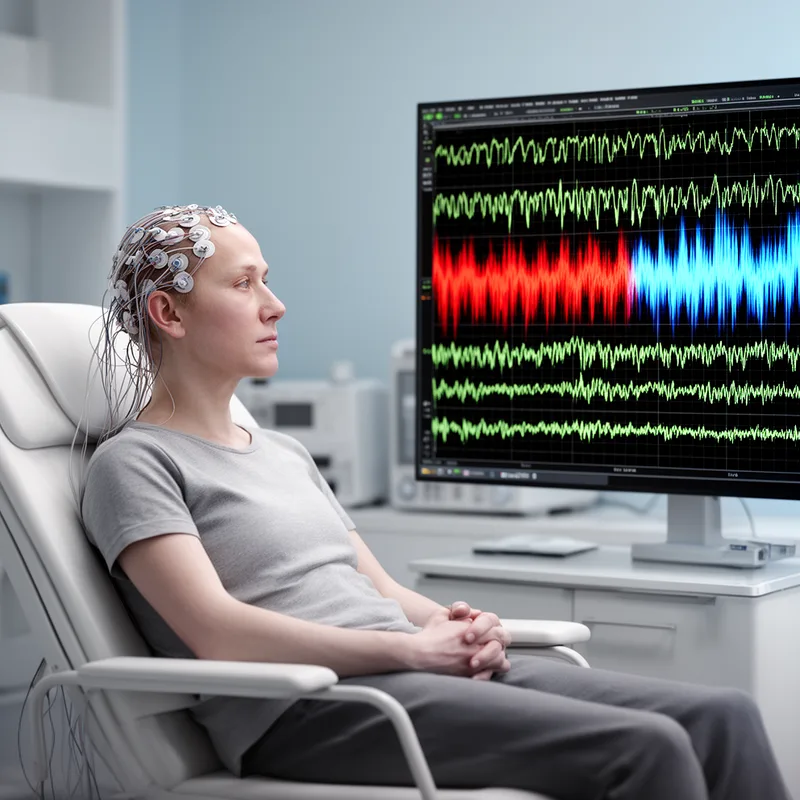
subclinical absence
- noun
- /sʌbˈklɪnɪkəl ˈæbsəns/
- Specialized
- The neurologist identified a subclinical absence on the EEG despite the patient appearing alert.
Examples
-
Patients with subclinical absences often do not realize they are having seizures.
-
The EEG showed a subclinical absence during the test.
-
Subclinical absence seizures can complicate the diagnosis of certain epilepsy syndromes.
-
Routine monitoring revealed subclinical absences that went unnoticed by the patient.
-
Subclinical absence seizures can complicate the diagnosis of certain epilepsy syndromes.
-
Routine monitoring revealed subclinical absence seizures that went unnoticed by the patient.
-
The neurologist identified a subclinical absence on the EEG despite the patient appearing alert.
Synonyms

 5
9.3
5
9.3

A short time when a person stares blankly, does not respond, and sometimes makes small movements
 1
7.5
1
7.5
A short, sudden moment when a person stares blankly and does not respond, often with blinking or twitching

A short, sudden loss of awareness with no other symptoms
How Observable
- Specialized

- Specialized
1
7.5
- Specialized
Surface Forms
Morphology
The meaning is directly compositional: 'subclinical' means without noticeable symptoms and 'absence' refers to a brief epileptic lapse, so together they denote an absence seizure that lacks observable clinical signs (detectable only by EEG). This is a standard medical noun phrase formed by straightforward modification, making the sense derivable for learners who know both constituent words.
Etymology
Subclinical absence comes from medicine: absence means a very short time when a person seems 'absent' or not aware, and subclinical means 'below what doctors can see'. So the name explains that these brief seizures have no clear signs and are found only with special brain tests.