
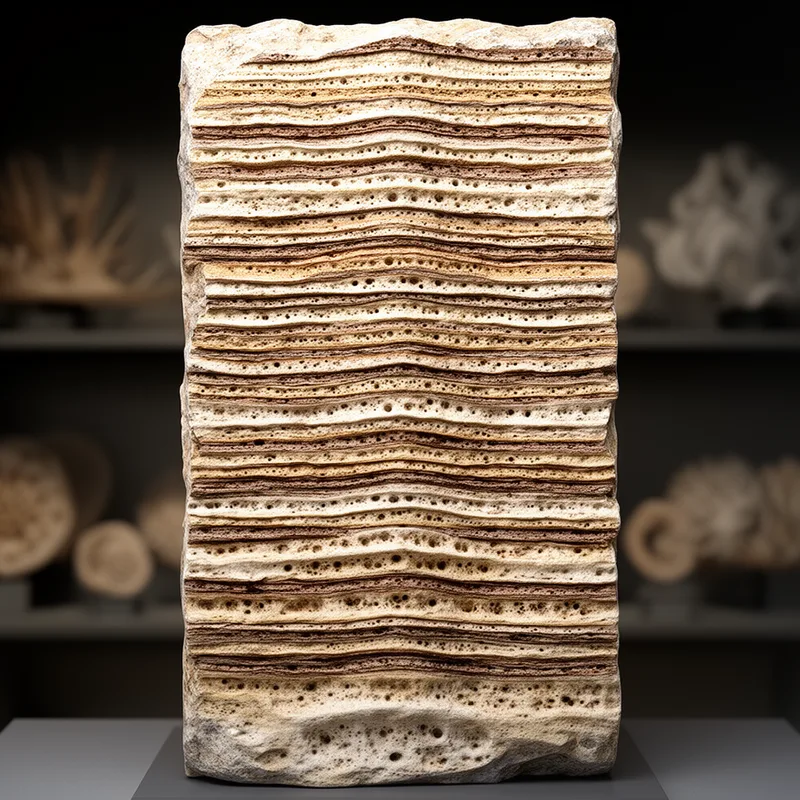
stromatoporoid


 1
9.9
- adjective
- /strəˌmætəˈpɔrɔɪd/
- Specialized
- Researchers identified several stromatoporoid structures in the rock layers from the Devonian period.
Examples
-
Is this rock formation stromatoporoid in origin?
-
The museum displayed a stromatoporoid fossil alongside other prehistoric marine specimens.
-
The limestone had a distinct stromatoporoid texture, indicating the presence of ancient reef builders.
-
The geologist examined a stromatoporoid structure closely.
-
The geologist described the ancient rock formations as stromatoporoid due to their layered structure resembling those formed by ancient sponges.
-
Fossils found in this area exhibit stromatoporoid characteristics, indicating a rich and diverse marine ecosystem millions of years ago.
-
During the field study, we identified several sections of the reef that were undeniably stromatoporoid, showcasing their unique fossil patterns.
How Similar

Surface Forms
Morphology
stromatoporoid = stromato + poro + oid
Formed from Greek combining forms plus '-oid' to mean 'relating to or resembling stromatoporoids'; the components are specialist combining forms not recognizable as independent English words, making the derivation non-obvious to average learners.
Etymology
Stromatoporoid comes from Greek parts stroma 'layer', poros 'pore', and -oid 'like', and you can see poros in porous and -oid in asteroid. So when a rock or fossil is called stromatoporoid, it means it has layers and pores like those old reef builders.