
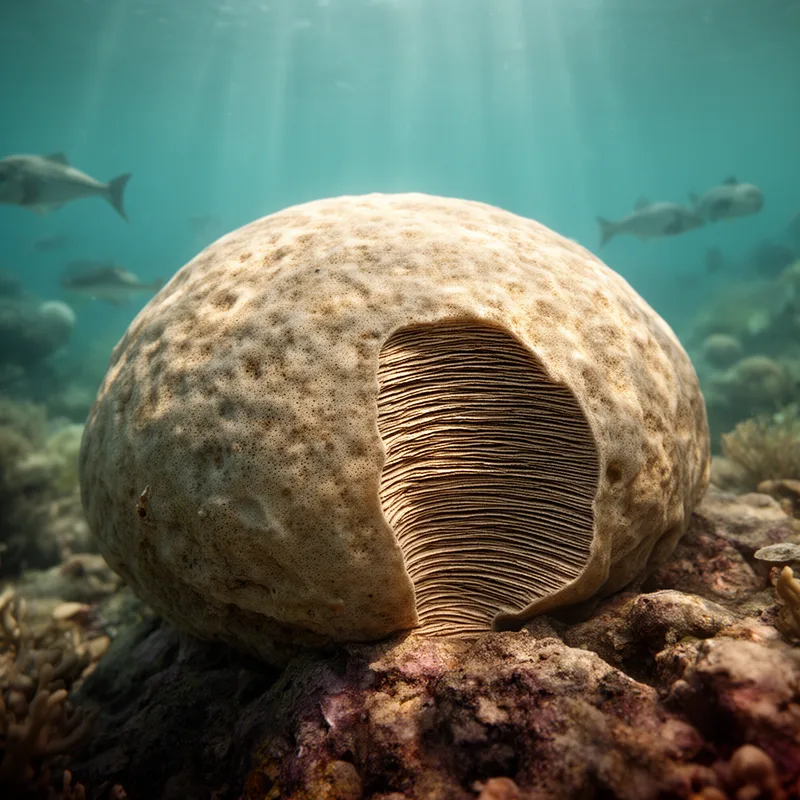
stromatoporoid


 1
9.9
- noun
- /strəˌmætəˈpɔrɔɪd/
- Specialized
- Scientists study stromatoporoid skeletons to learn about prehistoric ocean environments.
Examples
-
Many stromatoporoids contributed to the structure of prehistoric reefs.
-
The geologist discovered a large stromatoporoid fossil embedded in the limestone.
-
A large stromatoporoid specimen was discovered embedded in the limestone outcrop.
-
The stromatoporoid fossils were discovered in the ancient limestone.
-
The geologist discovered a large stromatoporoid fossil embedded in the limestone.
-
Scientists study stromatoporoid skeletons to learn about prehistoric ocean environments.
-
Many stromatoporoids contributed to the structure of prehistoric reefs.
Surface Forms
Morphology
stromatoporoid = stromato + poro + oid
The term is built from specialized Greek combining forms ('stromato-' + 'poro-') plus the scientific suffix '-oid'; these are not productive standalone English morphemes and the meaning is technical, so an average B1 learner cannot derive the sense from the parts.
Etymology
Stromatoporoid comes from Greek parts stroma 'layer', poros 'pore', and -oid 'like', and you can see poros in porous and -oid in asteroid. So a stromatoporoid is a layered, porous fossil that built ancient reef structures.