
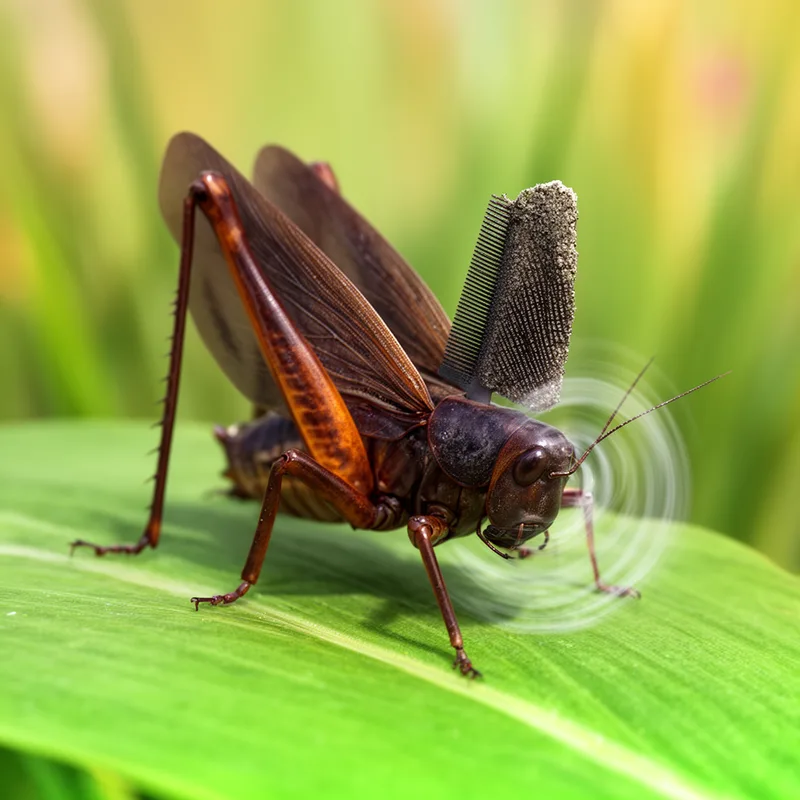
stridulatory


 1
9.9
- adjective
- /ˌstrɪdʒ.əˈleɪ.tɔːr.i/
- Specialized
- Many insects have specialized stridulatory structures for communication or defense.
Examples
-
Scientists studied the stridulatory behavior of beetles during mating season.
-
The cricket's stridulatory organs allow it to produce its characteristic chirping sound.
-
The stridulatory sounds of crickets can be heard at night.
-
Some species of grasshoppers are known for their stridulatory abilities.
-
The stridulatory sounds of the crickets filled the warm summer night.
-
His research focused on the stridulatory mechanisms of various insect species.
-
Many insects produce a stridulatory effect by rubbing their wings together.
Synonyms
 1
9.9
Making a loud, harsh, grating sound like some insects make
Antonyms


Surface Forms
Morphology
stridulatory = stridulate (semi-transparent) = stridulate + atory
The adjective is transparently formed from a verb meaning 'to produce sound by rubbing body parts together', but both the verb and the concept are technical and uncommon for general learners.
Etymology
The word stridulatory comes from the Latin verb stridere, which means 'to make a harsh sound', and it shares the same root as strident. So stridulatory describes how some insects make noise by rubbing body parts together, which helps you remember it is about producing sound.