
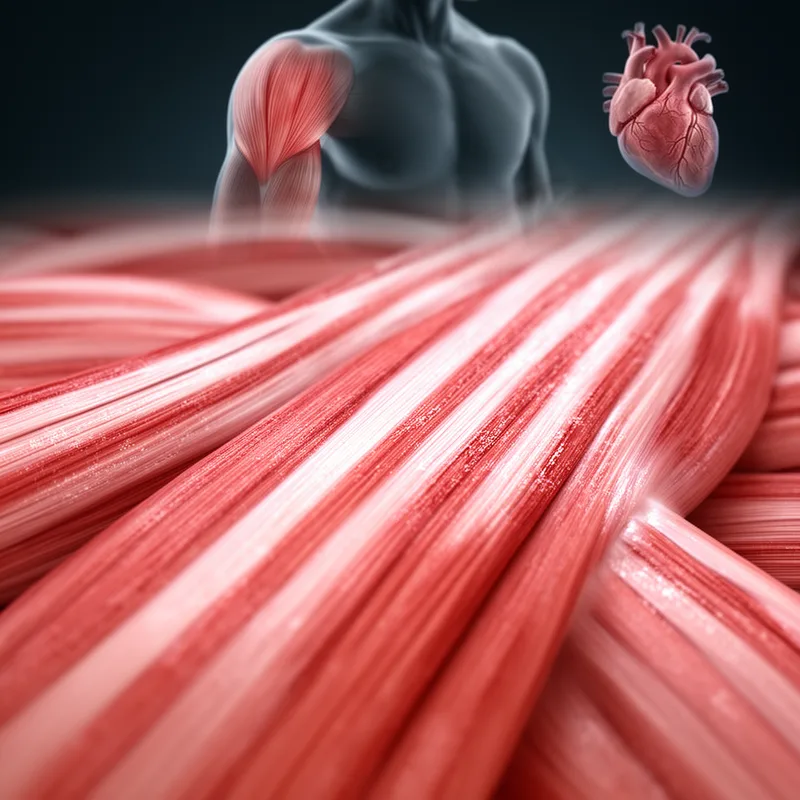
striated muscle tissue


 1
5.6
1
5.6
- noun
- /ˈstraɪ.eɪ.tɪd ˈmʌs.əl ˈtɪʃ.uː/
- Specialized
- Under the microscope, striated muscle tissue can be easily distinguished from smooth muscle tissue by its visible bands.
Examples
-
Scientists studied how exercise affects the regeneration of striated muscle tissue in mice.
-
Cardiac muscle is a type of striated muscle tissue found only in the heart.
-
The striated muscle tissue is essential for voluntary movements.
-
Cardiac striated muscle tissue is found in the heart.
-
Under the microscope, we can clearly see the pattern of transverse stripes in striated muscle tissue.
-
Athletes often focus on strengthening their striated muscle tissue for better performance in sports.
-
Cardiac and skeletal muscles are types of striated muscle tissue that control voluntary movements.
Surface Forms
Morphology
The meaning is directly compositional: 'striated' (marked by parallel/transverse stripes) modifies 'muscle tissue' (tissue made of muscle), so the phrase denotes muscle tissue that shows stripe-like markings. This follows a regular adjective + noun pattern and is cross-linguistically transparent, so a learner who knows the constituent words can infer the MWE meaning.
Etymology
Striated muscle tissue uses striated (meaning 'striped') and muscle tissue because, under a microscope, these muscles show clear light and dark bands like stripes, so the name gives a simple picture to remember. That's why the term refers to the kind of muscle found in the heart and in the muscles that move the body.