
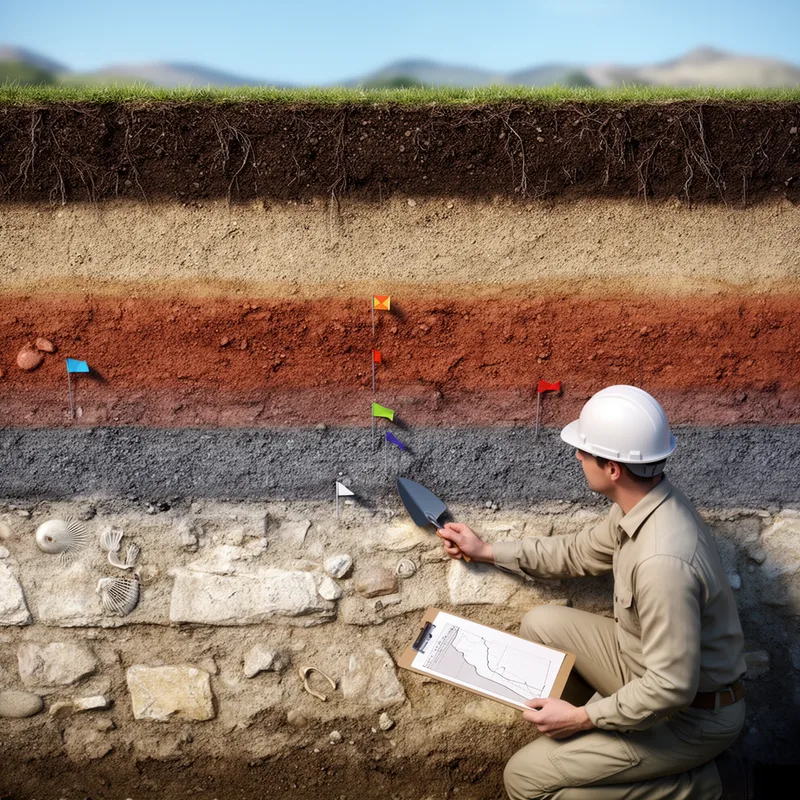
stratigraphical
- adjective
- /ˌstrætɪˈɡræfɪkəl/
- Specialized
- The researchers used stratigraphical data to analyze the layers of sediment in the canyon.
Examples
-
Understanding the stratigraphical arrangement of the rocks helps geologists interpret the Earth's history.
-
From a stratigraphical point of view, all layers were continuous and no gaps had been attested between the layers (Hessari, 2010).
Academic text (2014) -
Another source of information to establish hypotheses for CP is geological reconstructions, which are often based on paleontological and stratigraphical data and which have helped to determine the chronology of orogenic processes such as volcanism and river or mountain formation.
Academic text (2011) -
The stratigraphical study revealed how different layers of soil were formed over millions of years.
Synonyms
 1
8.1
1
8.1

Relating to layers of rock or soil under the ground
Surface Forms
Morphology
stratigraphical = stratigraphic (semi-transparent) = stratigraphy + ic + al
Formation from 'stratigraphy' -> 'stratigraphic' -> 'stratigraphical' is regular, but the base is technical and the '-ic' → '-ical' alternation may confuse learners.
Etymology
Stratigraphical comes from parts that mean 'layer' (strata) and 'write' or 'draw' (graph), the same graph you see in charts. So a stratigraphical study is like 'drawing' or showing the layers of rock under the ground, which is why a stratigraphical map shows the order of layers.