

to strand
 141
6.7
141
6.7

- verb
- /strænd/
- The heavy storm left the hikers stranded in the mountains without any supplies.
- leave someone stranded
- become stranded
- find themselves stranded
Loading YouTube…
Watch on YouTubeAnd then we come back to the shore and I'm with someone who gets a phone call and they say that's that was Seth Seth on his boat and he stranded.
- And then we come back to the shore and I'm with someone who gets a phone call and they say that's that was Seth Seth on his boat and he stranded.
- But because, you know, people are, are stranded out there looking for work and they can't, you know, they try and make sure that they cope with that exercise up until to the end.
Examples
-
The portal sealed itself instantly, leaving Kirk stranded outside a pub on a dark street.
Fiction book (1991) -
I knew you wouldn't leave your own brother stranded forever!
-
Hey, sir, we're stranded out here.
-
For the next week, we were stranded.
-
My boat is stranded in the roots.
-
They'd been stranded by the rising water.
-
Due to the fierce blizzard outside, I am stranded here.
-
I can't believe we're stranded in the middle of nowhere on your anniversary.
-
I had the impression that I was stranded alone in a desolate place.
Fiction book (1994) -
Immigrant arrivals employed on railway and mining jobs found themselves stranded with the arrival of winter.
Academic text (1991)
Synonyms
 19
7.8
19
7.8
To leave someone in a place where they cannot escape, especially on an island
 12
4.8
12
4.8
To be lost at sea or to cause a ship to be lost
 10
6.7
10
6.7
To get a boat or ship stuck in shallow water near the shore
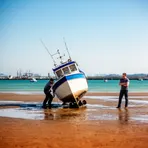
Leave a boat on shore or in shallow water so it cannot move
Antonyms


Phrasal Verbs
Compounds


- South African
A wild animal like a hyena that eats dead animals and lives in southern Africa

- Specialized
A thin part inside a plant stem or leaf that carries water and food to the cells
How Abandoned

Surface Forms
Etymology
The verb strand comes from the shore meaning — to leave a ship on the beach — so to be 'stranded' is to be left 'stuck' with no easy way to get help.