
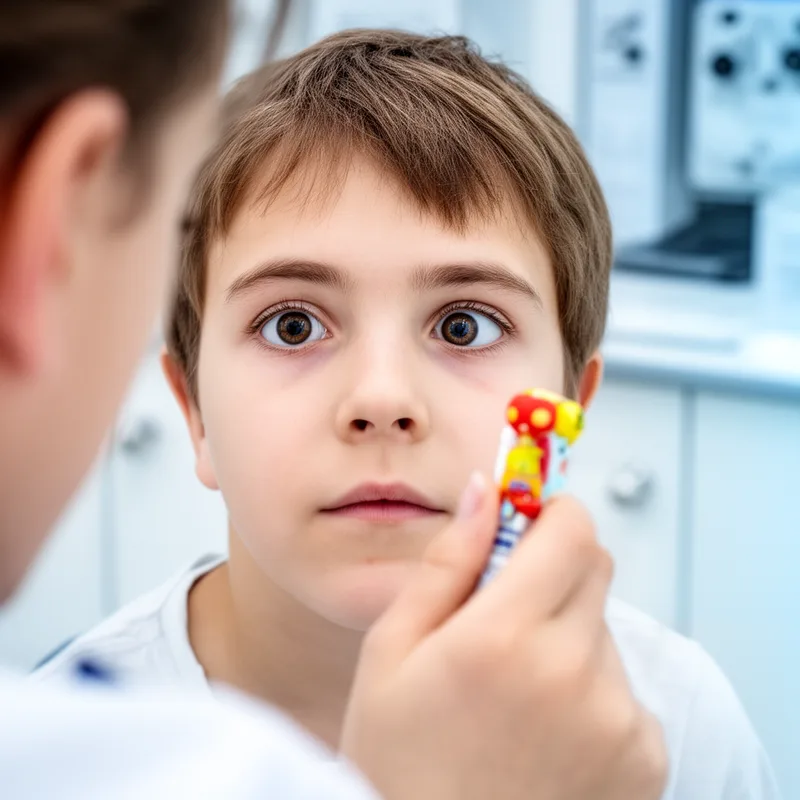
strabismic
- adjective
- /strəˈbɪzmɪk/
- Specialized
- The child underwent surgery to correct her strabismic condition and improve her vision.
Examples
-
His left eye is severely strabismic.
Fiction book (2000) -
Pittman, a smallish, thinnish, sharp-faced man with ash-gray hair and soft, strabismic brown eyes, lives here with his wife, Lois, and Mickey, a white pit bull.
Fiction book (1997) -
The doctor explained that strabismic eyes can lead to difficulties with depth perception.
-
While watching the movie, he noticed that the strabismic patterns in his vision made it hard to focus.
Synonyms
 3
6.3
3
6.3

Eyes that turn inward toward the nose


 1
9.9
1
9.9
Having eyes that turn outward and look in different directions

Having eyes that do not look in the same direction

A person who has eyes that look in different directions
How Misaligned

Surface Forms
Morphology
strabismic = strabismus (transparent) = strabismus + ic
Formed by the regular adjectival suffix '-ic' on the noun 'strabismus', so the adjective clearly means 'relating to strabismus'.
Etymology
Strabismic comes from the Greek word strabismos meaning 'to look sideways' or 'squint'. So a strabismic eye is one that does not point straight, which is why the word is used for eyes that are not lined up.