

stone pine
- noun
- /stoʊn paɪn/
- The stone pine's broad crown creates a lovely shade on hot summer days.
Examples
-
Fronting the shops and restaurants beyond the deep sidewalks, eighty-foot stone pines spread their branches across the street.
Fiction book (1998) -
Lilly Wing lives on a street shaded and scented by stone pines.
Fiction book (1998) -
The stone pines in the park provide a beautiful setting for outdoor gatherings.
-
Many people enjoy gathering pine nuts from the stone pines that grow along the coast.
Synonyms

A medium-sized pine tree with an umbrella-shaped top that makes edible seeds called pine nuts
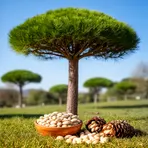
A medium-sized tree with a flat, wide top and edible seeds like almonds
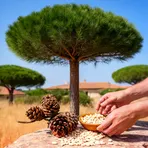
A medium-sized tree from southern Europe with a wide top that makes edible seeds like small almonds
Surface Forms
Morphology
The compound structure makes it clear to a B1 learner that this is a kind of pine tree (stone + pine = a pine type), so the basic referent is transparent. However, the specific species-level sense and the link between 'stone' and the tree's edible seeds (and Mediterranean origin) are lexicalized cultural details that are not predictable from the constituents, so it is not fully transparent.
Etymology
Stone pine may come from the tree's hard, round seeds that look like small stones, so the word stone pictures the seed and pine names the tree. That's why people grow it for its 'pine nuts'.

