
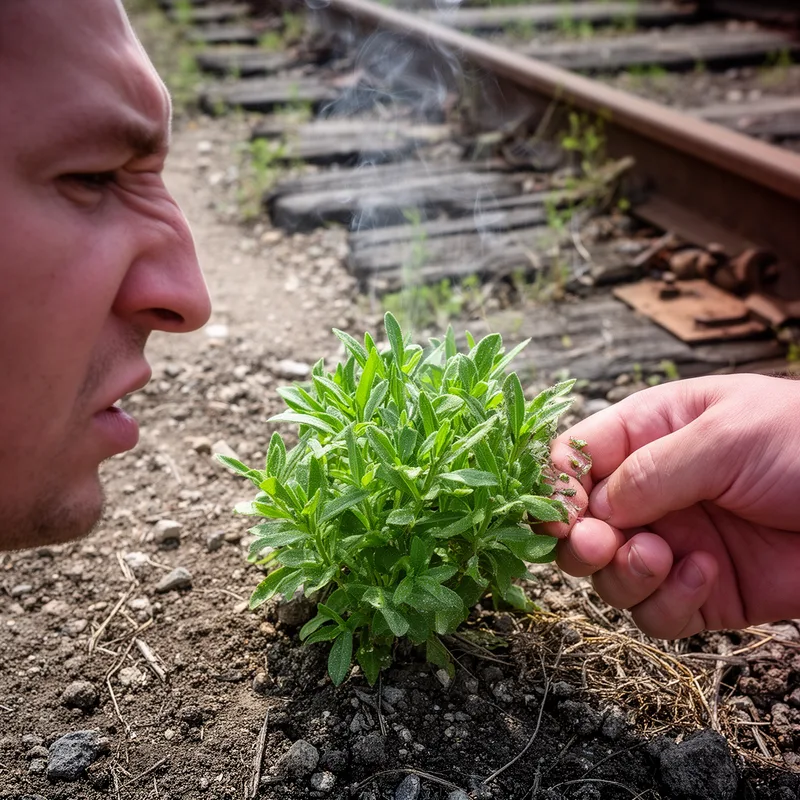
stinking goosefoot
- noun
- Specialized
- The stinking goosefoot gives off a pungent odor when its leaves are crushed.
Examples
-
Although rare, stinking goosefoot sometimes appears in disturbed soils in North America.
-
Botanists found stinking goosefoot growing wild along the abandoned railway tracks.
-
The stinking goosefoot is often found in damp areas.
-
Have you seen a stinking goosefoot before?
-
The stinking goosefoot grows in disturbed areas, releasing a strong odor when touched.
-
Farmers often struggle with stinking goosefoot due to its strong smell and rapid growth.
-
Walking through the garden, I noticed the stinking goosefoot among other wild plants.
Synonyms

A small wild plant with a strong smell that grows in Europe and North America
Surface Forms
Morphology
The noun phrase is plainly descriptive: 'stinking' modifies 'goosefoot', indicating a goosefoot plant that emits a strong, offensive odor. This adjective+noun composition follows regular English composition patterns and is non-idiomatic, so a B1 learner who knows both constituents can readily infer the intended botanical meaning.
Etymology
Stinking goosefoot comes from two simple ideas: stinking because the leaves give a very strong smell when you crush them, and goosefoot because the leaf shape looks like a goose's foot, so the name simply describes the plant.

