

to stink up the place
 3
7.5

- phrasal verb
- The overflowing garbage bin is starting to stink up the place.
Examples
-
I followed Baby Doll to the kitchen where a pot of boiling chitlins stunk up the place.
Fiction book (1993) -
Don't stink up the place.
Fiction book (1997) -
You make me an officer and give me some money... ...or, by God, I'll stink up the place.
-
I better get this in the ground before it stinks up the place.
-
You're starting to stink up the place.
-
You don't want me stinking up the place.
-
It’s starting to stink up the place.
-
What we ought to do is get some cat litter so that Betty can't claim Hogan stunk up the place and keep his two-month rental deposit on him.
Fiction book (1995) -
The stale food left out overnight really began to stink up the place.
-
If we don't take out the trash soon, it will stink up the place.
Synonyms
 22
4.8
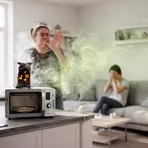
Make a place smell very bad
 4
7.5
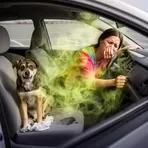
Make a place or thing smell bad
 1
6.7
To fill a place with a very bad smell
Antonyms
 9
3.0
Open something so wind from outside moves through it to remove bad smells or moisture
How Smelly

Surface Forms
Morphology
The meaning 'to cause a location to smell unpleasant' is directly derivable from combining 'stink' (give off an unpleasant odor) with the particle 'up' (a common causative/intensifying particle) plus 'place' (location). This verb+particle composition follows a transparent causative pattern in English that a B1 learner who knows the constituents would readily infer.
Etymology
Stink up the place gives a simple picture: something with a strong bad smell, like burnt popcorn or old garbage, seems to stink and rise up into the air, filling the place. That's why it means 'to cause a place to smell very bad'.