

to stink up
 15
4.8
15
4.8

- phrasal verb
- /stɪŋk ʌp/
- Wife: Babe, I need you to take out the rubbish right away; it's starting to stink up the kitchen.
- stink up the house
- stink up the place
- stink up my room
Loading YouTube…
Watch on YouTubeSo onions stink up the lab and they're hard to see in a camera, but.
- So onions stink up the lab and they're hard to see in a camera, but.
Examples
-
A rotting smell is stinking up the house.
Fiction book (1997) -
No, I wouldn't want to stink up the inside of your car.
-
One dead body down here stinks up the whole building.
-
Throw this thing away before it stinks up the whole house.
-
You're starting to stink up the place.
-
Don't stink up the place.
Fiction book (1997) -
I followed Baby Doll to the kitchen where a pot of boiling chitlins stunk up the place.
Fiction book (1993) -
My husband golfs and he stinks up our car with his sweat workout, golf gear, all that.
-
He laughs every time you step into bed and stink up your sheets after midnight snacking on that leftover Chinese takeout that has been decomposing in the refrigerator for a week.
-
The garbage left out for days will stink up the kitchen if we don't take it out soon.
Synonyms
 3
7.5
3
7.5
Make a place smell very bad
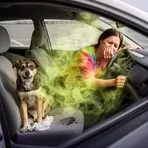

 1
6.7
1
6.7
To fill a place with a very bad smell
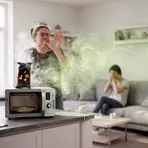 1
7.5
1
7.5
Make a place or thing smell bad
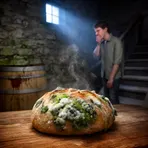 1
9.9
1
9.9
To become or make something smell stale and moldy
Antonyms


How Smelly
- Informal
5
8.1
 33
5.9
15
4.8
165
1.0
862
1.0
33
5.9
15
4.8
165
1.0
862
1.0
Surface Forms
Morphology
The meaning 'to cause (a place or thing) to smell very unpleasant' is directly derivable from 'stink' (to give off an unpleasant odor) combined with the particle 'up', which here functions as an intensifier/causative indicating filling or making thoroughly. This verb+particle composition is a common, transparent English pattern so a B1 learner who knows both constituents should infer the MWE's meaning.
Etymology
The phrasal verb stink up comes from the picture of a bad smell rising and filling a room. Stink is the bad smell and up shows it spreads, so the phrase means 'to make a place smell very bad'.