
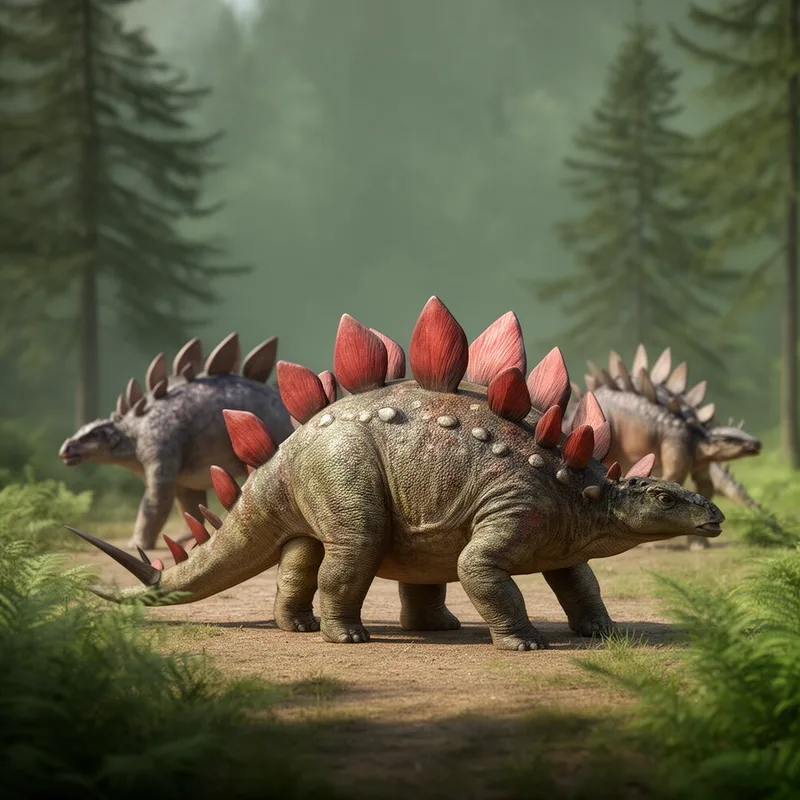
stegosaurian
- adjective
- /ˌstɛɡəˈsɔriən/
- Specialized
- The paleontologist identified the fossil as having stegosaurian characteristics, such as the distinctive back plates.
Examples
-
Many stegosaurian species had distinctive plates along their backs.
-
The museum's new exhibit features a life-sized model of a stegosaurian dinosaur.
-
Researchers compared the bone structure of several stegosaurian species to understand their evolution.
-
The stegosaurian fossils were discovered in a remote area of Utah.
-
The fossil of the dinosaur revealed several stegosaurian traits, including its unique body shape and spinal plates.
-
Paleontologists are studying stegosaurian features to gain insights into the behavior of these prehistoric dinosaurs.
-
In the documentary, experts discussed various stegosaurian adaptations that helped the species survive in its habitat.
Surface Forms
Morphology
Etymology
Stegosaurian comes from the dinosaur name Stegosaurus, which is made from the Greek parts stegos meaning 'roof' and sauros meaning 'lizard'. So stegosaurian describes something like the Stegosaurus, especially its plate-covered back, because the plates looked like a row of small 'roofs'.

